
Trip Report: Costa Rica Central Sur 2024
Day 1
Our group convened for opening dinner at Hotel El Rodeo, introduced ourselves to one another, and met Fito, our local guide with us throughout our tour. We talked about what brought us to Costa Rica, the two birds that we wanted to see on the tour, and one thing that we wanted to learn about the ecology. Folks shared a wide variety of birds, including the Speckled Tanager, Resplendent Quetzal, and White-necked Jacobin. Some folks shared the highlights from their half-day birding tour arranged with a local guide to take advantage of time before the official start of the tour. Following the tour opening and dinner, trip checklists were passed out, and we went over the plan for tomorrow!
Day 2
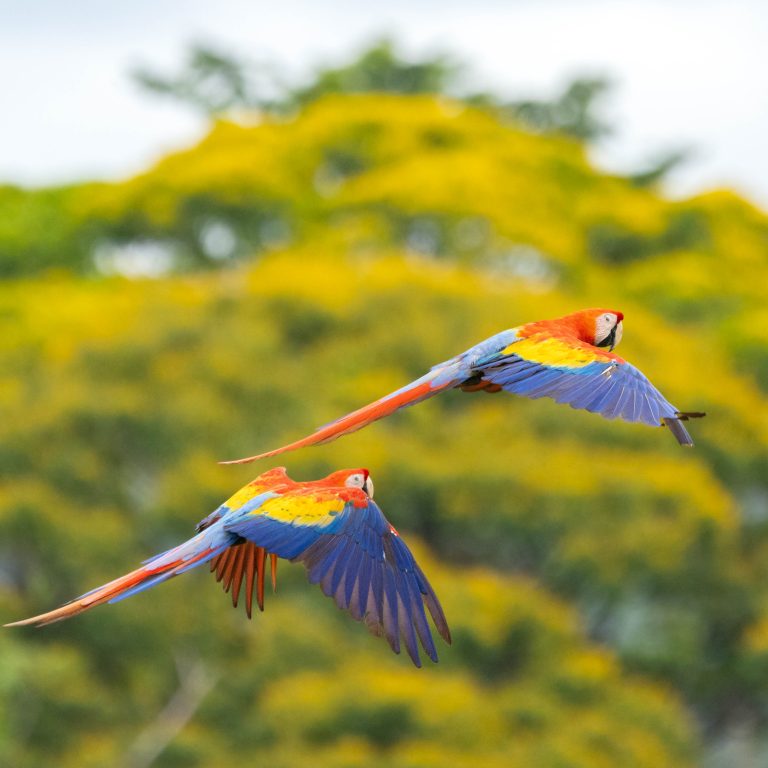
In the morning, Melvin, our awesome driver, helped load our gear onto the spacious bus, and we were off to start our adventure! We drove from San Jose to a nearby dry forest to hit our first birding spot of the trip. Our first stop was along a backroad, where Fito spotted a pair of Scarlet Macaws nesting in a palm tree snag. The first official bird of our tour was quite a crowd-pleaser and just so happened to be the bird advertised for the tour! We soaked in the views of these stunning parrots and snapped some pics. A few minutes down the road, we jumped out of the bus again, this time treated to a couple dozen gorgeous tropical birds calling around us. Highlights from the dry forest included the handsome Plain-capped Starthroat, Green-breasted Mango, Short-tailed Hawk, and the stunning Turquoise-browed Motmot, which perched close by, giving everyone excellent looks!
Later in the morning, we made our way closer to the coast and did some road cruising looking for more dry forest residents. Some of the awesome birds we got on, included the unique grassland shorebird, the Double-striped Thicknee found in pastures and grasslands. Other stunners included Wood Stork, Ferruginous Pygmy Owl, Yellow-headed Caracara perched on the head of a cow, a flock of Orange-fronted Parakeets, and a couple of vocal Rufous-naped Wrens hopping around closeby.
Our next stop was an obligatory visit to the iconic Rio Tarcoles bridge, where a resident population of American Crocodiles is easy to spot. Ranging in size from 6 to 10+ feet, these reptilian behemoths never fail to impress. As we walked out to the bridge, we spotted a stunning Scarlet Macaw in perfect light feeding in a nearby tree. At the bridge overlook, we also picked up a Little Blue Heron, Green Heron, Black-necked Stilts, and a couple of Mangrove Swallows.

We walked back onto the bus and then drove to the Rio Tarcoles for lunch, then checked into our hotel and headed back out for a sunset birding boat tour on the lower stretch of the Rio Tarcoles. This riverway is home to tons of aquatic birds and provides excellent opportunities for photography. As soon as we stepped onto our private boat, we had birds all around us. The first things spotted were Wood Storks, Roseate Spoonbill, Great Kiskadee, and a stunning Bare-throated Tiger Heron walked right up to the boat! We cruised upstream and spotted Amazon, Belted, Green, and Ringed Kingfishers along the riverbank.
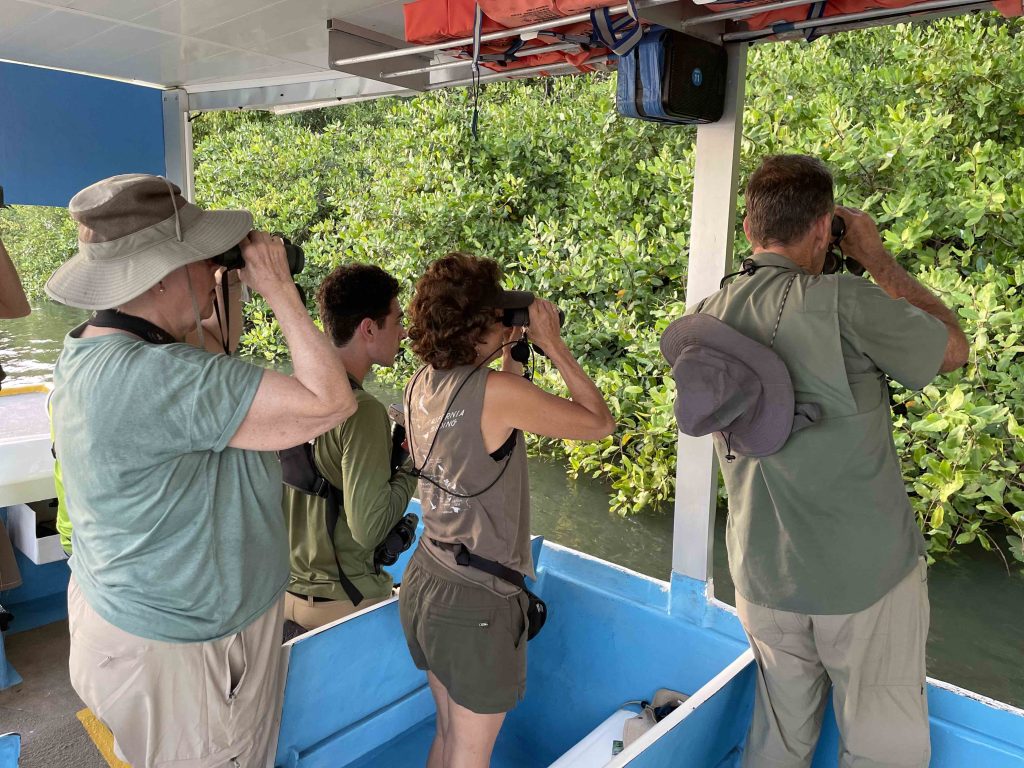
Afterward, we headed downriver to scope out shorebirds foraging along the sandy bank, which yielded Black-bellied, Semipalmated, the big-billed Wilson’s Plover, and a single Ruddy Turnstone that got flagged as rare on eBird! Across the river, we observed 200+ Brown Pelicans coming into roost atop the mangroves, and perched nearby were a handful of Magnificent Frigatebirds. We then headed into the mangroves to search for the range-restricted Mangrove Hummingbird which visits Tea Mangrove flowers. In addition to spotting this little cutie, we also got great looks at a pair of perched Common Black Hawks and a pair of Yellow-naped Parrots calling raucously from the canopy. As the sun started to dip, we cruised over to look for one of the main Tarcoles targets, the charismatic Boat-billed Herons also locally known as the Chocuaco. This time we got on two of them peering through the cover of the mangroves.
During our 2.5-hour private boat tour, we observed a whopping 54 species of birds and got all of the main targets! An experience our group won’t soon forget!

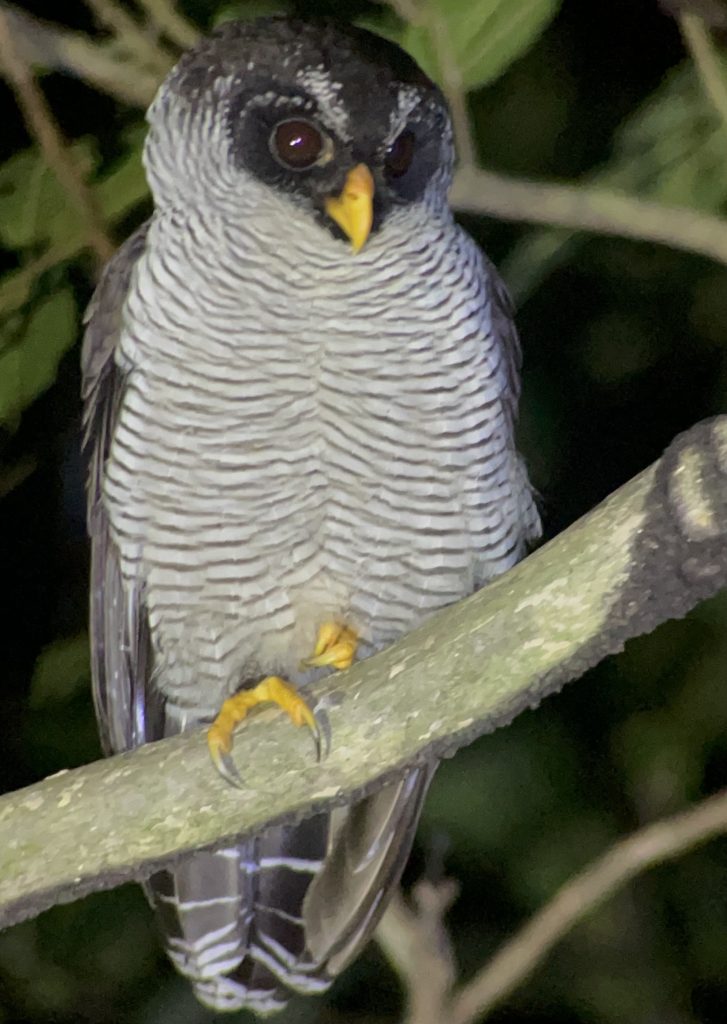
We disembarked the boat and made our way to our lodge to refresh, grab dinner at a local restaurant, and head back to our lodge. Before we went to lay down for the night, we did a quick search for owls, hoping for the common Pacific Screech Owl, but instead of this pint-sized predator, we spotted a stunning Black-and-White Owl. It perched close by affording excellent photo opportunities and time to view this handsome bat-eating predator through the scope. Here we also spotted our first Caprimulgid, the Common Pauraque.
Day 3
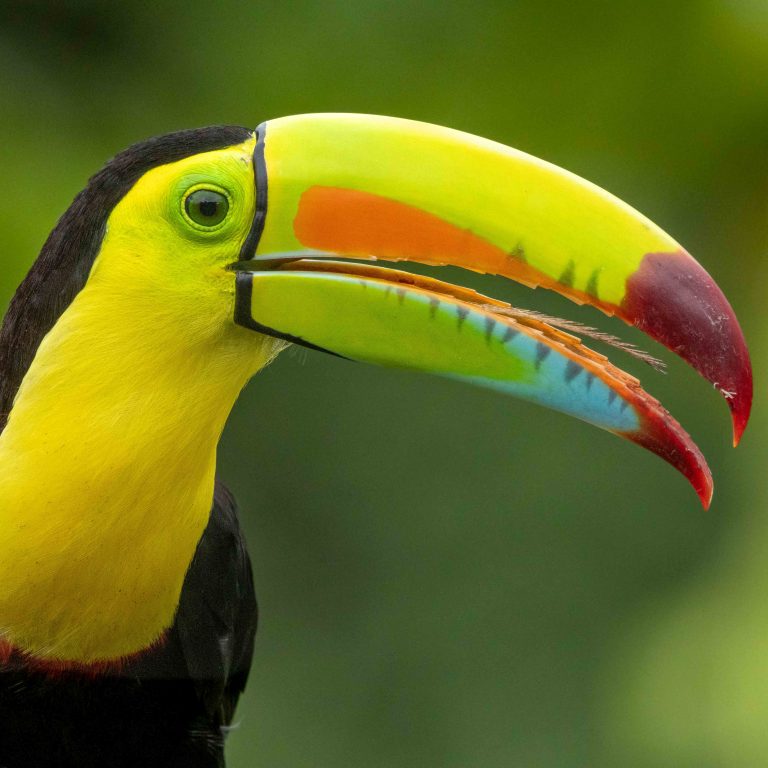
Before breakfast, we birded the grounds of our eco-lodge, and the first birds spotted were Ferruginous Pygmy Owls. One of the individuals was the uncommonly seen Rufous Morph! We also spotted a Yellow-throated Toucan, the first toucan of the tour! Following that, we got on Lesson’s Motmot. In the breakfast area, we had a pair of White-whiskered Puffbirds and Crested Guans perched overhead. A great start to day three!
After a delicious breakfast, we drove to Carara National Park. Carara National Park spans 52,850 acres and holds immense ecological importance as a vital habitat for numerous endangered species, including Scarlet Macaws and jaguars, within its transitional zone between the dry north and wetter south. Established in 1978, the park’s history intertwines with conservation efforts, showcasing the nation’s commitment to preserving its rich biodiversity and serving as a beacon for tropical rainforest conservation worldwide.
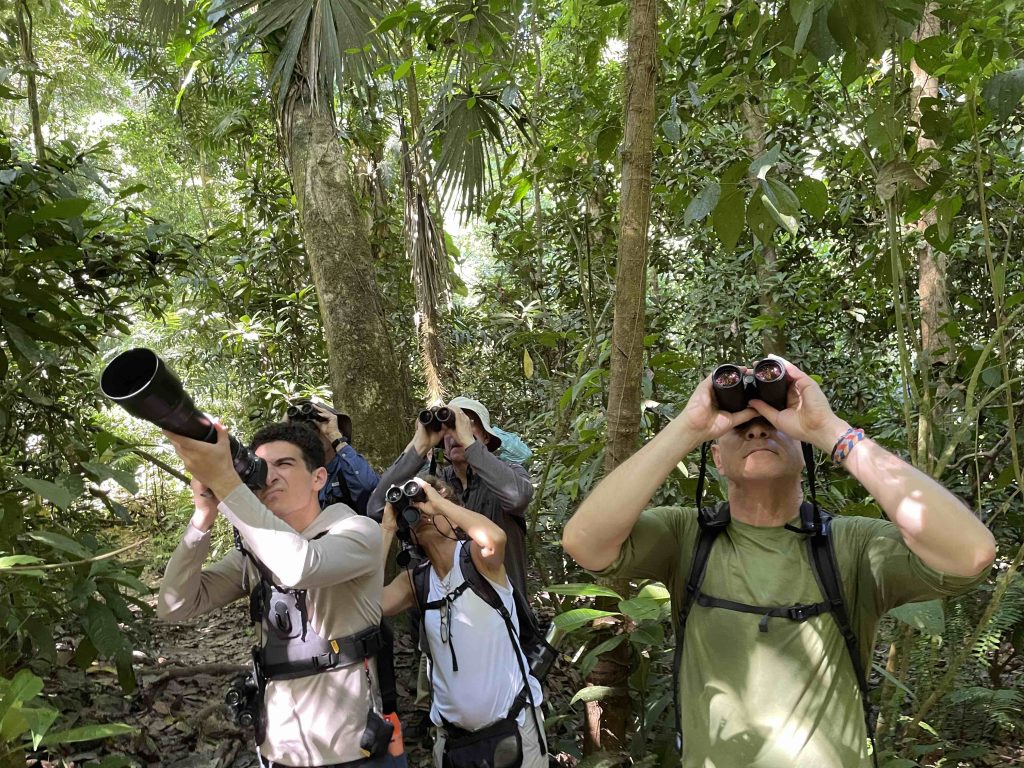
We spent most of our day walking the trails in search of new birds. In the parking lot, we got great looks at the stunning Golden-hooded Tanager and a Lesser Nighthawk day roosting on a tree branch! Shortly after walking the trails, we heard a Streak-chested Antpitta calling in the distance and got great looks at an adorable Purple-crowned Fairy preening itself. As we continued walking along the trails, we observed Northern Black-throated & Slaty-tailed Trogons. Other notable species we observed in the park included Great Tinamou, Tawny-winged Woodcreeper, Riverside Wren, Buff-rumped Warbler, Orange-billed Sparrow, and Chestnut-backed Antbird.
After a full morning in the park, we departed for lunch and a quick siesta in our rooms. At about 3:00 PM, we drove a short distance to the Tarcoles area to do some sunset birding. We picked up 46 species during our exploration, including more Scarlet Macaws, Barred Antshrike, Streak-headed Woodcreeper, Southern Beardless Tyrannulet, Rufous-breasted Wren, Rose-throated Becard, and Common Tody Flycatcher.
To close out the day we took in the sunset along the beach with some Laughing Gulls and Wood Storks. After our delicious dinner and checklists, we went back to the lodge to turn in for the night.
Day 4
Today, we departed the central Pacific lowlands and made our way through southern San Jose up to the Talamanca Mountains via the Cerro de La Muerte highway. After a couple of stops for restrooms and lunch, we made a stop along a forested stretch to do some road birding. The Savegre Valley is our home for the next few days, and home to tons of regional specialty birds that are only found in the highlands of the Talamancas, contained within Costa Rica and extreme western Panama. At this first stop, we picked up Sooty-capped Chlorospingus, Flame-throated Warbler, Volcano Hummingbird, White-throated Mountain Gem, and brief looks at the stunning Fiery-throated Hummingbird.
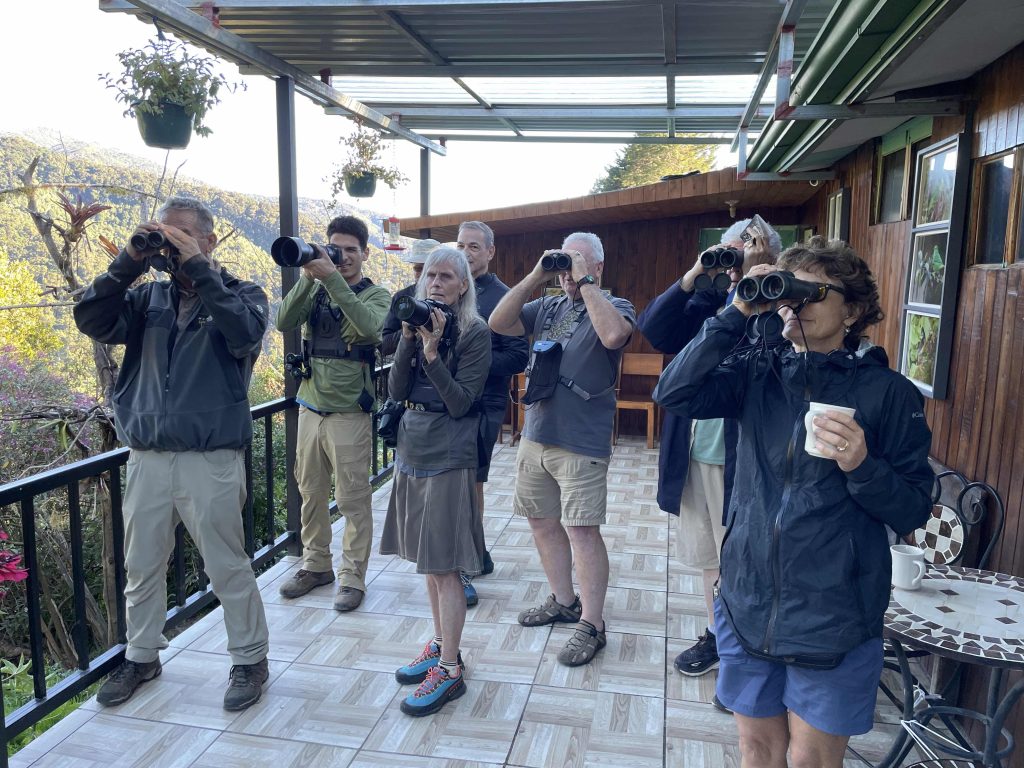
From here, we descended a bit further into the upper Savegre Valley with a stop at a local cafe, which has some awesome coffee and great fruit feeders, providing close looks at more regional endemics. Here, we got to closely observe the Large-footed Finch, Yellow-thighed Brushfinch, Talamanca Hummingbird, and the vibrant Flame-colored Tanager. Other birds we observed included the Acorn Woodpecker whose range extends from coastal British Colombia, Canada, down through the oak-pine woodlands of Mexico, through the Andes mountains of Northern South America. A welcome and surprising sight to many of our West Coast participants!
With the sun getting low, we drove a short distance to our lodge. We checked into our rooms and met up for dinner went over our bird checklist and settled in for the night.

Day 5
Today, our primary target was the Resplendent Quetzal, which required an early departure to descend into the lower section of the Savegre Valley. Along the way down, we passed through the gorgeous cloud-forest habitat and made our way to search for the king of the highlands, the most regal bird we have. Our visit was to a farmer’s property which hosts a breeding pair of birds. Attracted by the small avocado fruits native to the region, our group got some great looks at Resplendent Quetzals. Both a male and a female were present, and we got to see them foraging briefly. Everyone was stoked, first stop, double quetzal action!
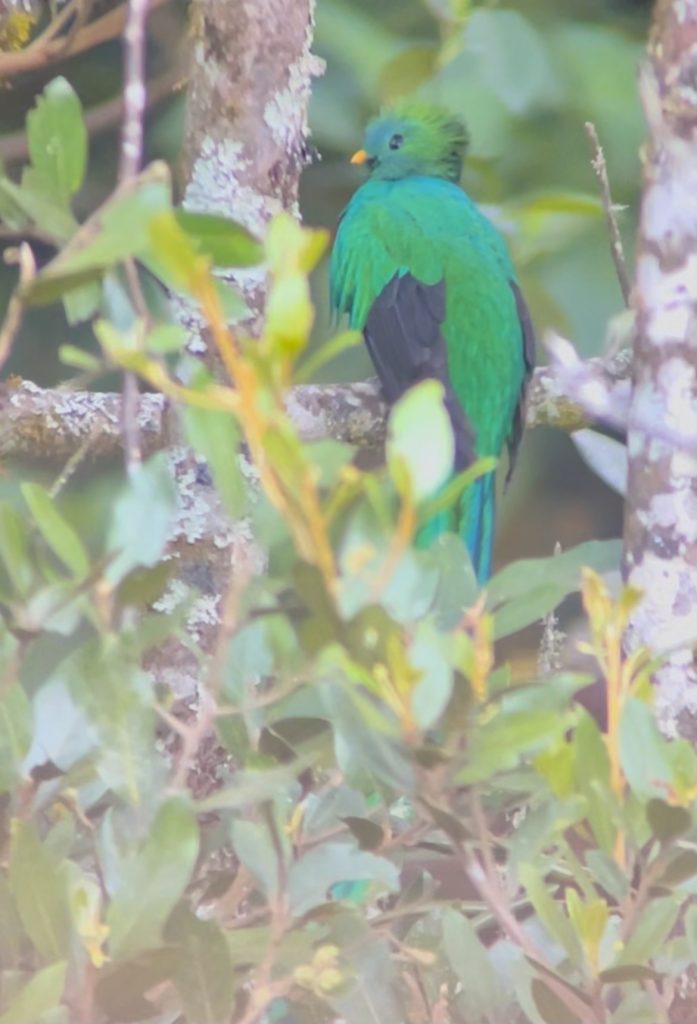
On the walk back to the van, we looked for the American Dippers we spotted on the way in. Back up the hill for breakfast at our lodge, we enjoyed a delicious meal with views of Yellow-thighed Brushfinch, Flame-colored Tanager, and Acorn Woodpecker visiting the fruit feeders outside.
Following our morning fuel up, we headed down the valley and did some stop, walk, and birding along the road. Here, we got great looks at Sulphur-winged Parakeets, Torrent Tyrannulet, Dark Pewee, Spangle-cheeked Tanagers, Long-tailed Silky-flycatchers, and Stripe-tailed Hummingbirds, to name a few. Out above the far west ridge, we picked up three White-collared Swifts quivering in the distance.
We went for lunch in the valley and then made our way straight to the highest point nearby. We chugged up the road and turned towards the Paramo. This tropical alpine ecosystem is extremely limited in Costa Rica. This patch of habitat in the country hosts two special birds, the Volcano Junco, and Timberline Wren. It took some time wandering around the stunning landscape to eventually get on the Timberline Wren. The paramo was quite sunny and windy, which are not ideal conditions for birding. However, we did get on Black-capped Flycatcher, Slaty Flowerpiercer, and Scintillant Hummingbird.
Everyone was eager to drop in elevation as 11,000 feet can be a bit chilly in Costa Rica. So we warmed up in the van and descended for coffee and hot chocolate at a nearby cafe, the same one we visited the day prior. We closed out the day with hot beverages and satisfying looks at White-throated Mountain-Gem, Lesser Violetear, Sooty-capped Chlorospingus, and the stunning Flame-colored Tanager.
Dinner and checklists before bed to do it all over again tomorrow!
Day 6
To take advantage of our last day in the highlands, we hit the Savegre Valley early in hopes of getting some more looks at the Resplendent Quetzal. We lucked out and saw another pair, albeit briefly, but we all got some great looks! While birding here we also got on the Black-cheeked Warbler, Black Guan, and heard Gray-breasted Wood-Wren singing in the dense understory behind us.
After a quick mission here, it was back to the hotel to grab breakfast and bags and hit the road. We have our longest drive of the trip today, heading down to the South Pacific, near the Osa Peninsula. However, along any drive, we always take little side missions to check spots for birds, good coffee, restrooms, and snacks, and sometimes those places all occur together!
On the way out we hit the Paramo one more time and lucked out with everyone getting to see the Volcano Junco, which we missed the day before! From here, we drove down the Cerro De La Muerte where our next stop was to an aforementioned all-in-one stop. With fresh juices in our hands, and new gorgeous species in our binos, everyone had a smile on their face. Red-legged Honeycreepers, Streaked Saltators, Blue Dacnis, and Boat-billed Flycatcher tend to do that to folks. We met some other nice birders and continued down the road.
We had a late lunch south of Dominical and continued towards our South Pacific lodging for the night. Along the entrance road, where grassland, riparian, and forest edge meet, a wide assortment of birds thrive. With the late afternoon light soaking through the vegetation, we sorted through an astonishing 46 species. Some of the crowd favorites included Scarlet-rumped Tanager, Red-lored Parrot, and Yellow-throated Toucans eye-level on the road!
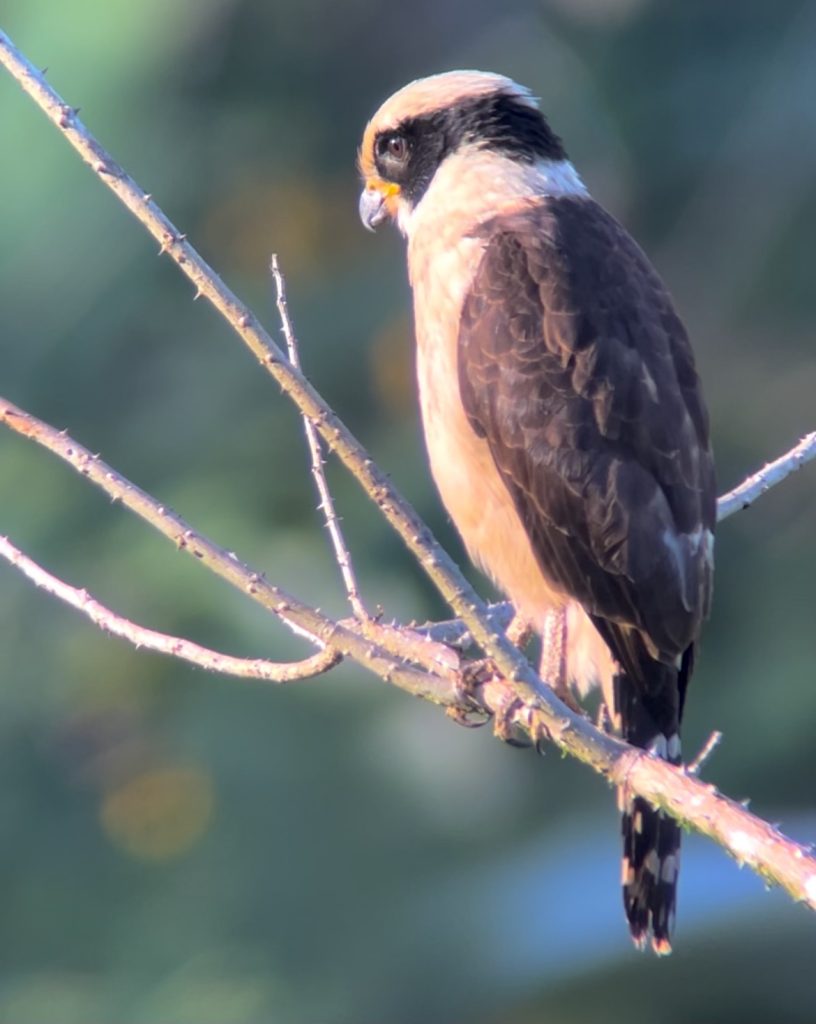
The real star of the show was the Laughing Falcon who perched nearly motionlessly from a shrub-like tree in the middle of the field, scanning with focus for snakes. Everyone reveled in this fantastic raptor spotted by Fito!
We loaded the bus, tallied our new birds, and pulled into the incredible grounds of Esquinas Rainforest Lodge. Back to Piedras Blancas National Park, and its beautifully landscaped surroundings, we were in a completely other world. Warmer, lower, and all the more “tropical”. After checking into our rooms we had some downtime to swim, shower, and relax.
Dinner, checklists, and an optional night stroll to look for nocturnal creatures followed. While walking under the light of the nearly full moon, we didn’t hear any owls. But we did see a Common Pauraque on the road, cryptically hunting insects. On our stroll back, we got to see the gorgeous Pacific Red-Eyed Treefrog, spotted by Steven, one of our participants!

Day 7
Today we woke up with hot beverages while casually birding the grounds until our official start at 6:00 AM. During our pre-breakfast walk we observed some 34 species and lots of new birds for the trip! Some stunners included Great Curassow, Common Tody-Flycatcher, Gray-cowled Wood-Rail, Charming Hummingbird, Mealy Parrot, and a group of Fiery-billed Aracaris putting on a show. After breakfast, we skedaddled on the bus to bird the surrounding areas. On our way out we picked up a gorgeous Fork-tailed Flycatcher perched on a barbed wire fence in the field. On our drive, one of our participants, Ian, spied a King Vulture soaring overhead in a kettle of Black Vultures. We pulled over and everyone got on the largest and most beautiful vulture in Costa Rica! We also picked up a distant Gray-lined Hawk hanging with the kettle!
A few minutes back in the bus, we birded another roadside stop. Here we got on the Veraguan Mango, a great southern specialty! Other birds that popped into view included Isthmian Wren, Amazon Kingfisher, and the stunning Pearl Kite! Black-bellied Whistling Ducks, Wood Stork, Roadside Hawk, Summer Tanager, and Crested Caracara were seen nearby.
After a good session in the surroundings, we made our way back to the lodge for lunch. Following a lunch break and a quick refresh, we loaded up for a drive to search for an epic target. Upon arrival, we were greeted by a large fig tree full of fruits where White-faced Capuchin Monkeys and Fiery-billed Aracari gathered. After being completely absorbed by the interaction, we walked to scan the river from the bridge. Our primary target here was the Yellow-billed Cotinga. We spotted it about 20 minutes into our session, deep downriver perched in the dry upper branches of a distant tree. We birded from our vantage point while waiting to see if the cotinga would come into the fig tree. While waiting, we spotted a Roseate Spoonbill, Magnificent Frigatebird, Tricolored Heron, Yellow-throated Toucan, Masked Tityra, and Red-lored Parrot. No luck on the Yellow-billed Cotinga, but then a bright turquoise shape perched atop the fruit-laden fig tree grabbed our attention. Much to our surprise it was a stunning male Turquoise Cotinga feeding nearby. As we moved to the other side of the bridge, the bird decided to move on, but while it flushed we got a brief but satisfying glimpse of this flying gem. This cotinga is a more challenging bird to spot at this location than the Yellow-billed!
Fifty-five species later, it was time to get the show on the road, as we still had a 1.5-hour drive back to the lodge. While we motored home we were treated to a rich orange sunset warming tree silhouettes and putting gratitude in our hearts!
Back at the lodge we rinsed and rallied for dinner! The end-of-day checklist and a brief owling attempt yielded more Common Paraques.
Day 8
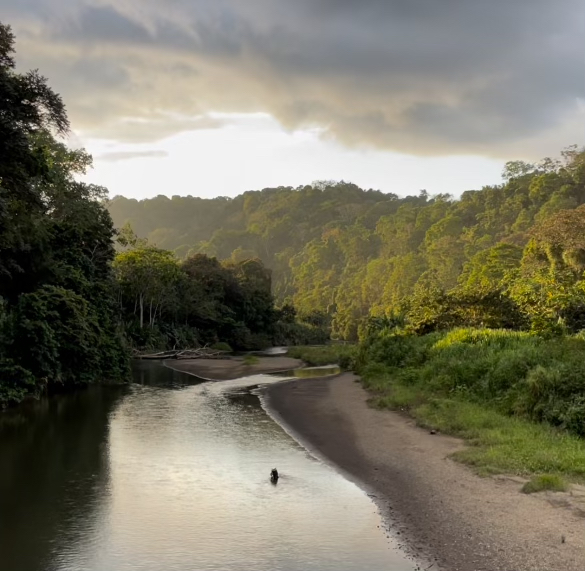
Our morning of birding at Esquinas Rainforest Lodge started with hot beverages and casual birding from the dining area. At 06:00 we kicked off with an epic show of Trogons foraging overhead. We counted six Slaty-tailed Trogon, one Baird’s, and one Gartered! We also got another chance to soak up views of the Laughing Falcon perched nearby.

While we slowly walked the nearby trails, we picked up Scarlet-rumped Cacique, Buff-rumped Warbler, White-shouldered Tanager, and got brief views of the endemic Black-cheeked Ant-Tanager. The full morning of birding also yielded great looks at White-necked Jacobin seen hovering along the roof edge where we ate breakfast. The morning produced a good raptor showing of King Vulture, Swallow-tailed Kite, Short-tailed Hawk, Gray-lined Hawk, and an epic Black-hawk Eagle, the last bird spotted before lunch. In the back of the sky, Fito was well rewarded for keeping his eyes to the skies. This late morning visitor put a smile on everyone’s face and a +1 on many folks’ life lists!
After a delicious lunch, we got to closely observe a Ringed Kingfisher gulping down a fish on a perch visible from the dining area. Right before we departed, a group of Fiery-billed Aracaris gave a great show as the five of them bounced around the cecropia limbs in plain view for our group and the other guests, seeing them behind the scope was a highlight for many viewers!
Hard to peel ourselves away from Esquinas, but alas we had more birds to see! We drove for a few hours to Perez Zeledon and stopped on the outskirts of the city to try for a better look at a stunning bird. After about five minutes of scanning, we found the stunning Turquoise Cotinga, again! In addition, we had great looks at a pair of Yellow-throated Toucans excavating a tree cavity to prepare for nesting!
Along the fenceline, we had fun comparing similar-looking yellow flycatchers, and then a flock of Least Sandpipers flew overhead, which was a pleasant surprise! After checking in and settling into our rooms, we met back up for dinner and checklist. Another fantastic day of birding and more to come tomorrow!
Day 9
Delicious local cuisine from the hotel fueled us before heading into the mountains above the city of Perez Zeledon. Our first stop was to a stunning property where lovely gardens bordered native flora and attracted a host of excellent birds!
The main target Snowy-bellied Hummingbird was observed in our first handful of minutes here. Amongst the wide makeup of birds here included Bay-headed, Silver-throated, Scarlet-rumped, Blue-gray, Golden-hooded, and Speckled Tanagers! We also were happy to see both the Red-legged and Green Honeycreepers popping in and out.
Soaring on the morning’s thermals we picked up a Double-toothed Kite, Gray and Short-tailed Hawk. After a productive stop here, we loaded and headed up the road.
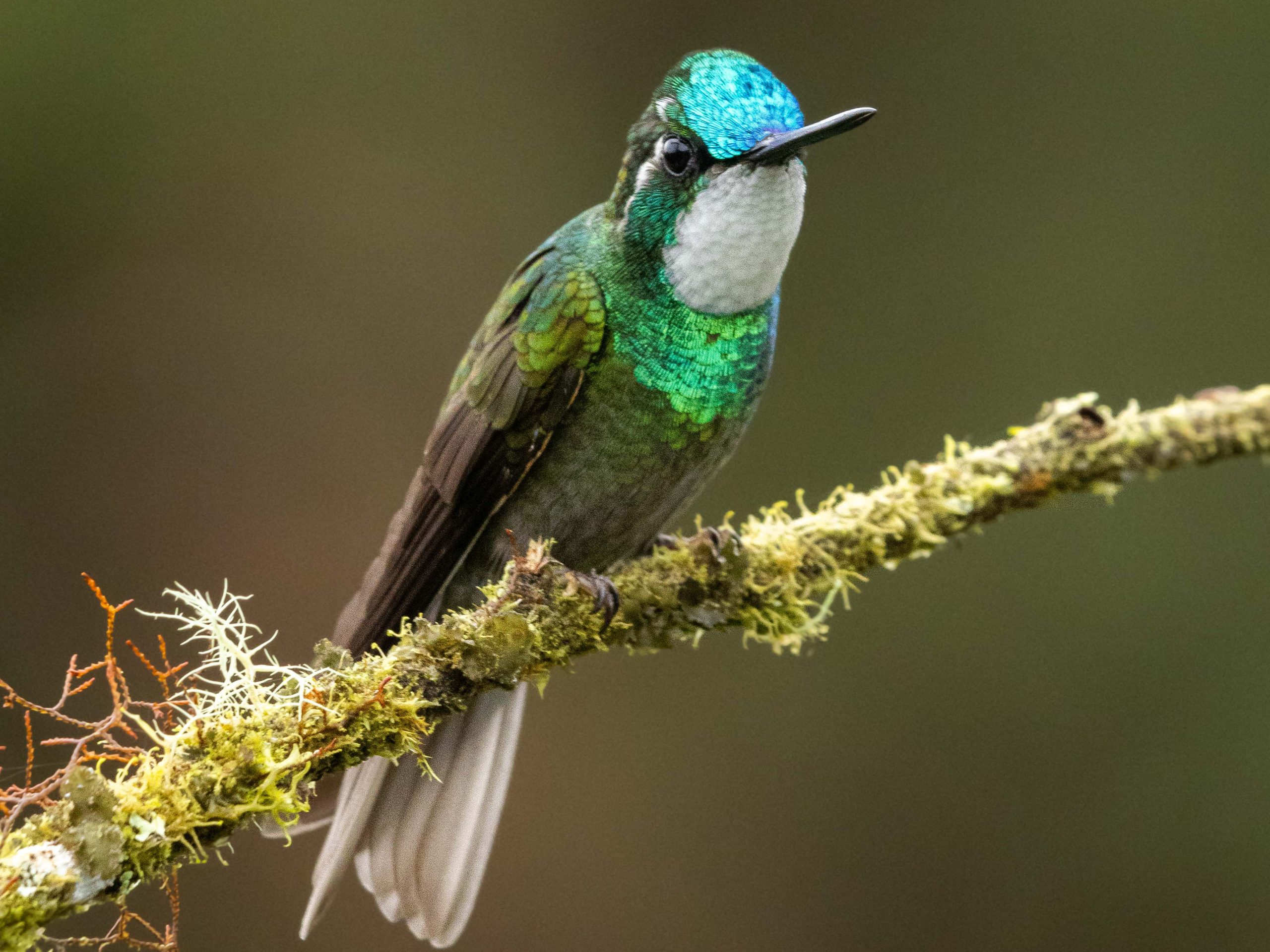
Our next birding foray happened just before lunch. At this stop we were pleased to get great looks at Red-headed Barbet, Violet Sabrewings, Green-crowned Brilliant, Long-billed Starthroat, White-tailed Emerald, and Snowy-bellied Hummingbird.
This short stop was productive, and yet we still had more road to cover, soon we would head back into the highlands of the Talamanca Mountains. Cerro de La Muerte awaited us, and so too did lunch! We arrived at a highland birding lodge to pick up some missing highlands specialties!
First new bird spotted was the Black-and-Yellow Silky Flycatcher, and then a stunning male Quetzal was spotted next to a fig tree with an exposed branch. We were so pleased and surprised to see Resplendent Quetzals for a third day on the tour, and it was late morning to boot, not a common time to see them! We went in for lunch and continued to explore. Hummingbird activity was low, so we took advantage of the grounds for more birding. The weather was great and the birds were quite active, with our group spotting four more Quetzals including several females and a male making short flights amidst foraging. The birds were so close that many folks got great images on their phones!

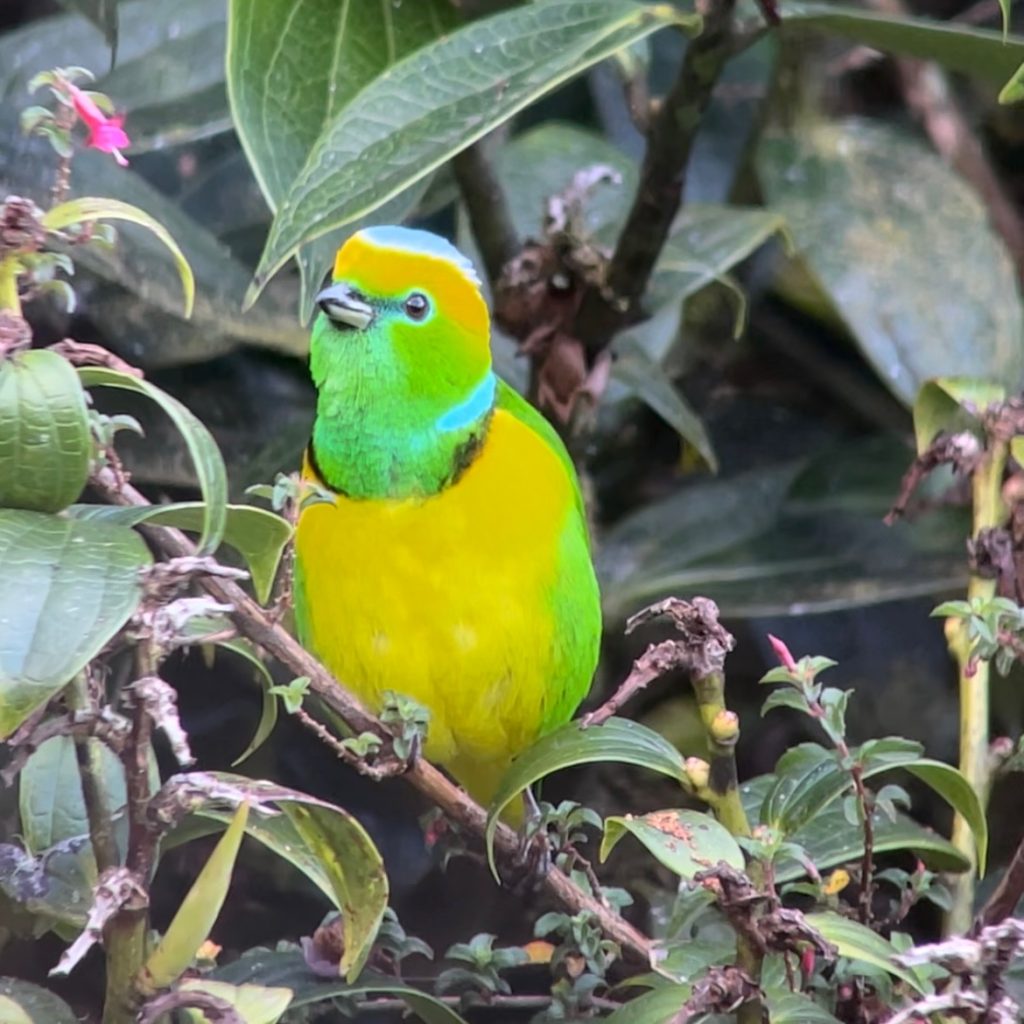
After a riot of a time with the Quetzals, we explored the garden area. Here we were further blessed with eye level experiences with the electric Golden-browed Chlorophonia. Several pairs foraged on the ripe fruits growing on the garden grounds. We were also pleased to observe an exquisite Fiery-throated Hummingbird zipping between the fuschia and other flowering plants. Barred Parakeet were heard overhead, and a pair of Costa Rican race of Hairy Woodpeckers were seen drumming on a dead tree.
What an incredible way to wrap up our birding time in Costa Rica! With a few more hours of driving ahead of us, we snapped some group pics, and made our way down Cerro de La Muerte, motoring on to the Central Valley and back to our hotel.
On the way back we picked up a White-tailed Kite which sat perched about 200 yards out, and then offered a flyby while we were stopped at the traffic light. Epic to see this resident raptor, especially since they can be easy to miss, and that we could compare its size to the tiny Pearl Kite we got on earlier in the trip!
After enjoying sunset on the road and plugging away through San Jose city traffic, we unloaded at Hotel El Rodeo! With 30 mins for a refresh, we circled back at dinner for final checklists and tour wrap up!
After our lovely dinner we retreated to one of the hotel’s lounge areas to add our final observations. Folks shared their heartfelt gratitude and although we were sad the tour was over, we were grateful for the time we shared.
In total, we wrapped up with 284 species of birds! However, the incredible memories, delicious meals, and belly laughs we shared along the way solidified our incredible tour together!
Day 10
On our final morning we bid a farewell and thank you to our guide Fito and our driver Melvin, who had been instrumental in making our birding tour a success.
With our bags packed and our hearts full of gratitude, we made our way to the airport to begin our journey home. As we boarded our flights and soared into the sky, we carried with us the joy of birdwatching in one of the most biodiverse countries in the world. Until next time, Costa Rica!
Join us next time in Costa Rica!
2025 Costa Rica Departures
Northern Region – Jan 3-11 // $3450
Central Sur Region – Jan 29 – Feb 7 // $4150
*Payment plans available too!