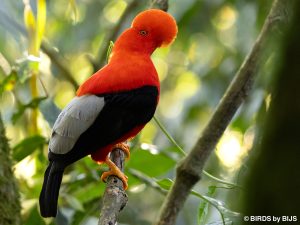
Trip Report: Trinidad & Tobago: Birding & Photography Tour // April 26 - May 5, 2026
Day 1 – Arrivals in Trinidad
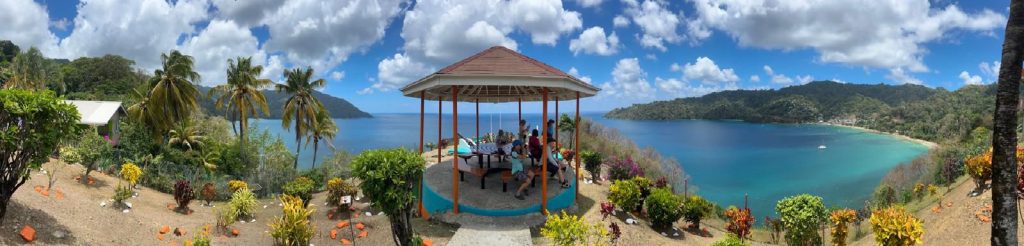
Our tour kicked off with afternoon arrivals at our wonderful lodge in central Trinidad. Everyone settled in, enjoyed a lovely opening dinner, socialized with the group, and went over the plan for our first full day of birding.
Day 2 – Leopold Trace & Upper Arima Valley
We began our first morning with an early session at the Upper House at Hacienda Jacana, and the property was absolutely alive. Right out of the gate, we were treated to an incredible showing of parrots, with the clear highlight being a flock of about twenty Lilac-tailed Parrotlets feeding just overhead. It was a sensational way to start the trip.

That moment was backed up by a strong supporting cast: Orange-winged Parrots, Red-bellied Macaws, and a quick flyby of Green-rumped Parrotlets, giving us four parrot species before breakfast. The surrounding trees were equally productive, with great looks at Turquoise Tanager and White-lined Tanager, both males and females, while Short-tailed Swifts zipped along the treeline above us.

After the session, we refueled with a solid breakfast spread of fresh fruit and all the essentials, and even from the dining area, the birds kept coming. We were treated to fantastic views of two absolute stunners: Tufted Coquette and Ruby-topaz Hummingbird, both adult males showing brilliantly before we even left the property.
From there, we loaded up and headed into the Northern Range, making our way up the Arima Valley to the world-famous Asa Wright Nature Centre. Arrival at Asa Wright is always a special moment: cool drinks in hand, a refreshing welcome after the drive, and then straight out onto the legendary veranda overlooking the valley. Activity was high right away at both the hummingbird and fruit feeders.
New species started rolling in quickly, including Copper-rumped Hummingbird, White-chested Emerald, and Brown Violetear, along with plenty of White-necked Jacobins dominating the feeders. The fruit tables pulled in a colorful mix of tanagers, including Bay-headed, Blue-gray, and Palm Tanager, and we were lucky to get excellent views of a Guianan Violaceous Trogon nearby.
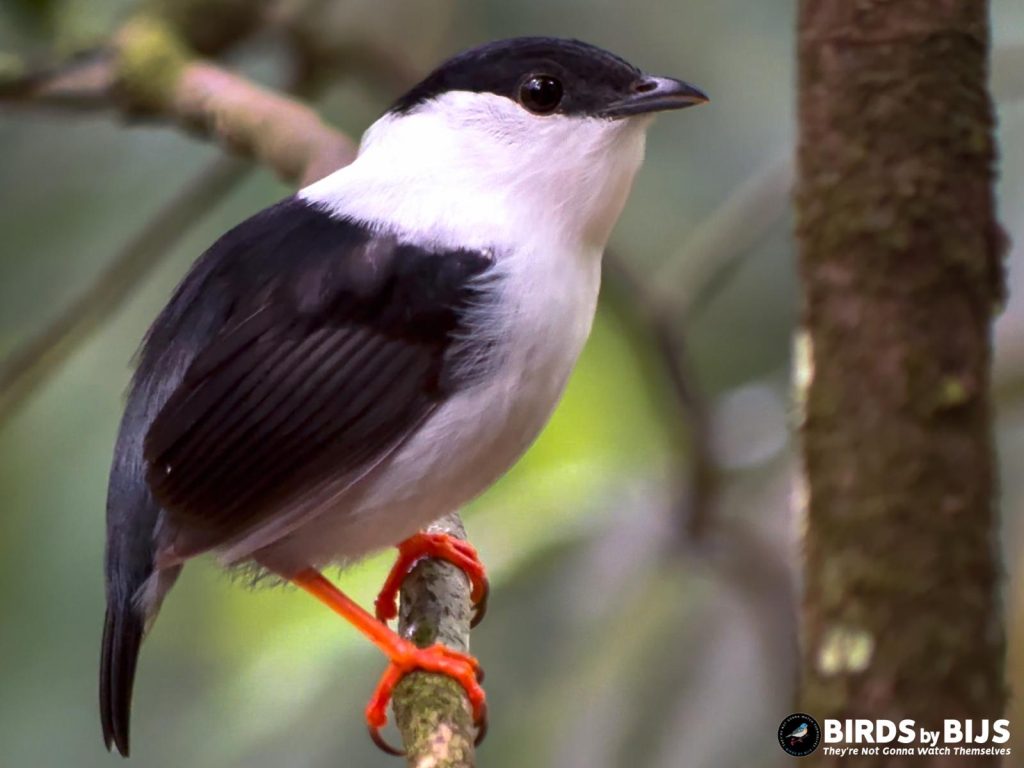
After a quick recharge, we hit the trails to explore the forest and dig into the history of this iconic site. Along the way, we passed the historic White-bearded Manakin lek, a site that has been active for over a century. It is always remarkable to stand somewhere with that kind of continuity.
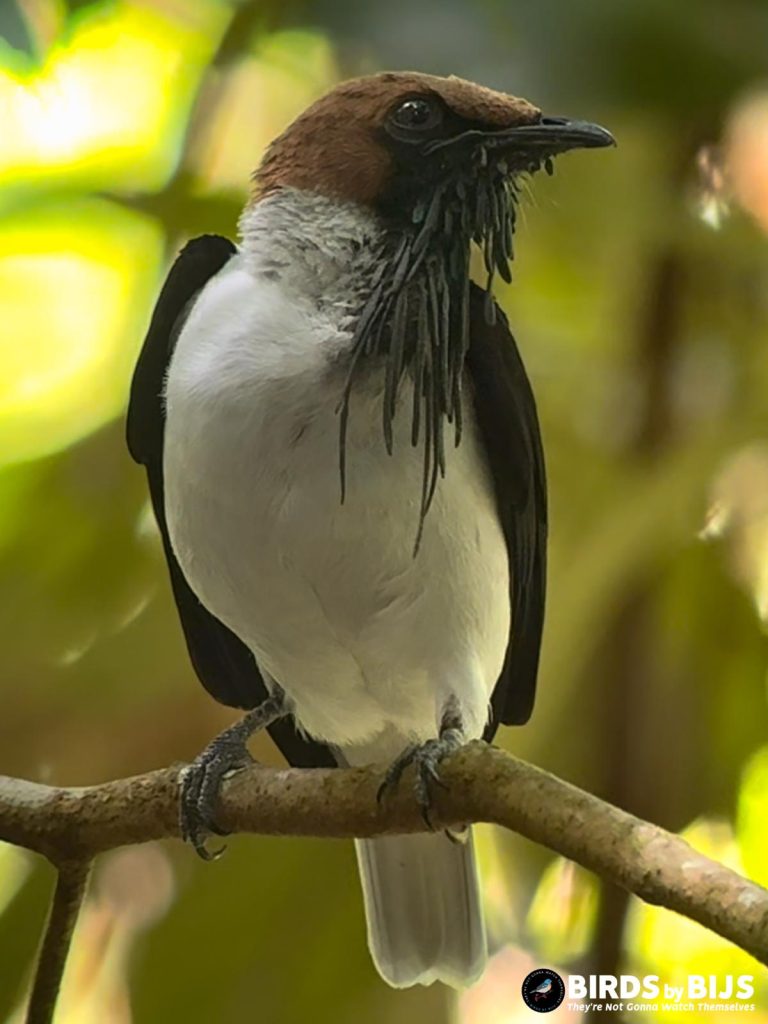
Further down the trail, we connected with one of the true stars of the Northern Range: the Bearded Bellbird. We had been hearing its metallic, hammer-on-anvil call from up at the lodge, but getting eyes on it was something else entirely. Eventually, we tracked it down and enjoyed extended views, watching, listening, and soaking in one of the most iconic sounds in Neotropical birding.
We made our way back up to the veranda for a well-earned lunch, followed by a classic Asa Wright siesta session, which is honestly one of the best places in the world to do absolutely nothing. Overhead, the raptor show kept things interesting, with White Hawk, Common Black Hawk, Zone-tailed Hawk, Swallow-tailed Kite, and the usual mix of vultures cruising through the valley.
In the afternoon, we returned to the trails and picked up a few more quality species, including Piratic Flycatcher and, after a bit of searching, a cooperative Rufous-browed Peppershrike. It gave us excellent, close views as it worked through the mid-levels just off the trail.
Back at our lodge, it was time to reset with showers, downtime, dinner, and a rundown of the plan for tomorrow.
Day 3 – Nariva Swamp & Trinidad Atlantic Coast
Day three began with an early departure from Hacienda Jacana toward Trinidad’s Atlantic coast. Along the drive, we flushed three Common Pauraques from the roadside and enjoyed stunning sunrise views of perched Blue-and-yellow Macaws glowing in the morning light.
By 7:00 AM, we reached the coast and quickly connected with one of the morning’s main targets: a fantastic Rufous Crab Hawk. Other highlights from the coastal birding included Magnificent Frigatebird, Yellow Oriole, Southern Rough-winged Swallow, and several wetland species around the Nariva River mouth, including Southern Lapwing, Spotted Sandpiper, and Striated Heron.
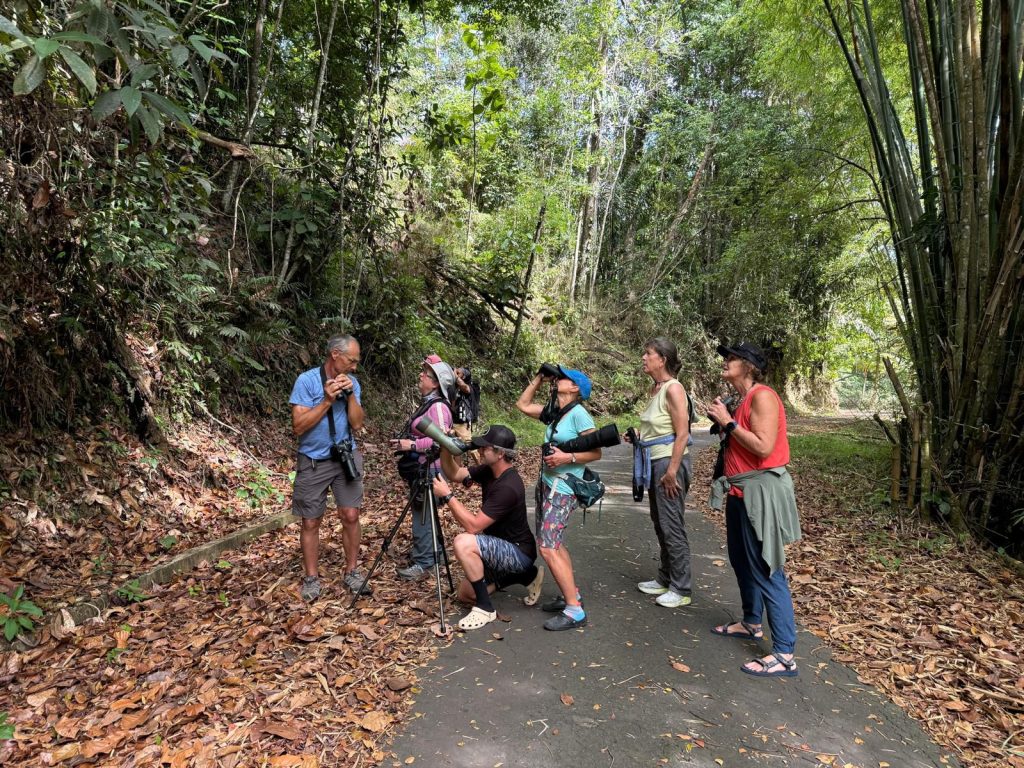
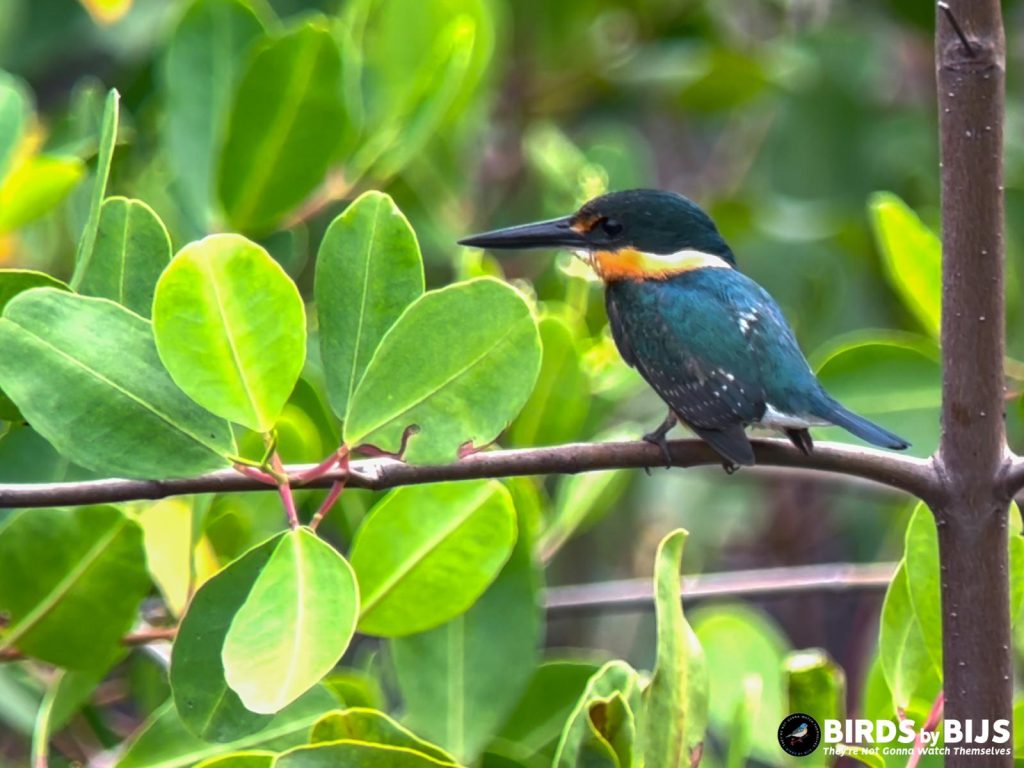
Birding around Nariva Swamp added a great mix of specialties, with Smooth-billed Ani, Blue-chinned Sapphire, Ruby-topaz Hummingbird, Pearl Kite, Savanna Hawk, and Gray-lined Hawk all showing well. One of the clear highlights of the morning was prolonged, close views of an American Pygmy Kingfisher perched along a small creek crossing. We also picked up Piratic Flycatcher, Rufous-browed Peppershrike, and displaying Yellow-rumped Caciques before returning to the lodge for lunch and a midday siesta.
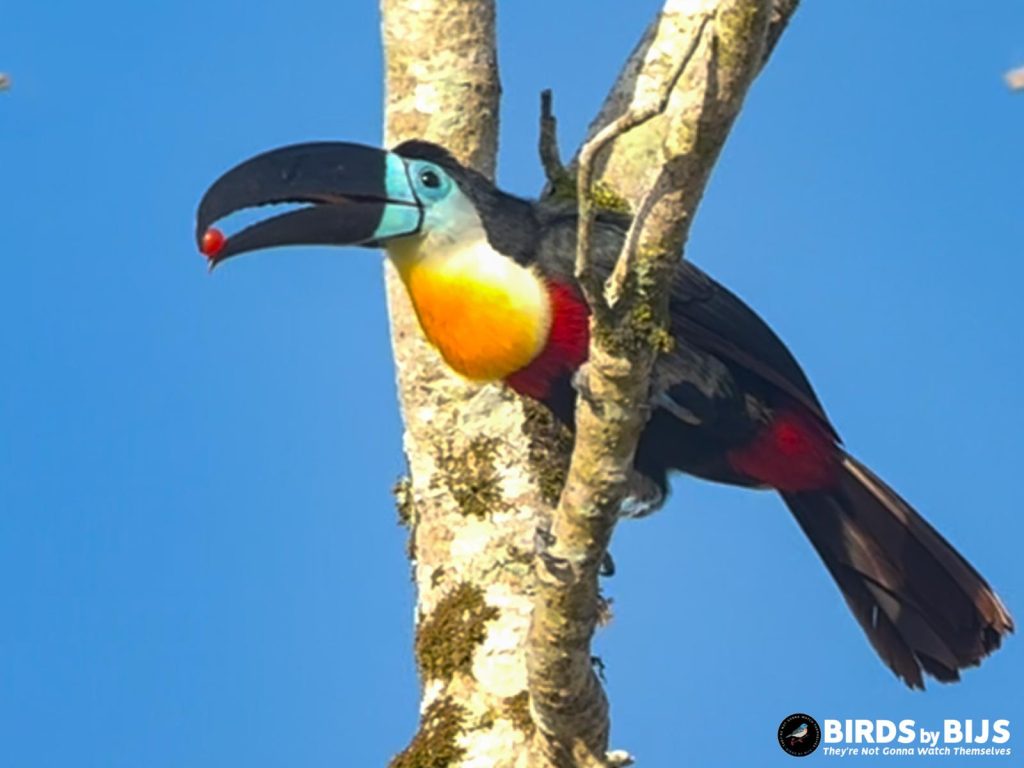
The evening session around the lodge was incredibly productive, tallying nearly 50 species before dark. Highlights included fantastic looks at Tufted Coquette, Black-throated Mango, and more Ruby-topaz Hummingbirds, along with wetland birds like Purple Gallinule and Wattled Jacana. A nesting Red-bellied Macaw at eye level provided one of the best encounters of the day, while Channel-billed Toucan, Plumbeous Kite, Plain-brown Woodcreeper, Streaked Flycatcher, and dazzling Turquoise Tanagers rounded out another excellent day in Trinidad.
Day 4 – Orange Grove, Pointe-à-Pierre & Caroni Swamp
Today, we kicked things off with a packed breakfast before heading out toward the Orange Grove area, a mix of agricultural lands and remnant forest patches that can hold a fun variety of species. Even in traffic, the birding had already started, with great looks at Yellow-hooded Blackbird and a Ringed Kingfisher hunting along a roadside creek.
Once at Orange Grove, highlights included Fork-tailed Palm Swift, plenty of Smooth-billed Anis, Ruddy Ground Doves, another American Pygmy Kingfisher, and two cooperative Gray-lined Hawks. We also enjoyed excellent views of Yellow-headed Caracara, Grayish Saltator, and Yellow-bellied Elaenia before continuing south.

Late morning was spent exploring the fantastic Pointe-à-Pierre Wildfowl Trust, one of Trinidad’s premier wetland conservation sites. The ponds were full of activity, including over 100 Black-bellied Whistling Ducks, along with Anhinga, Neotropic Cormorant, Little Blue Heron, and Striated Heron. Other highlights included Green Kingfisher, Northern Scrub Flycatcher, White-headed Marsh Tyrant, Pied Water Tyrant, and stunning views of Masked Cardinal and more Yellow-hooded Blackbirds.
After lunch and a chance to recharge in the shade, we headed for the legendary Caroni Swamp for an evening boat tour.
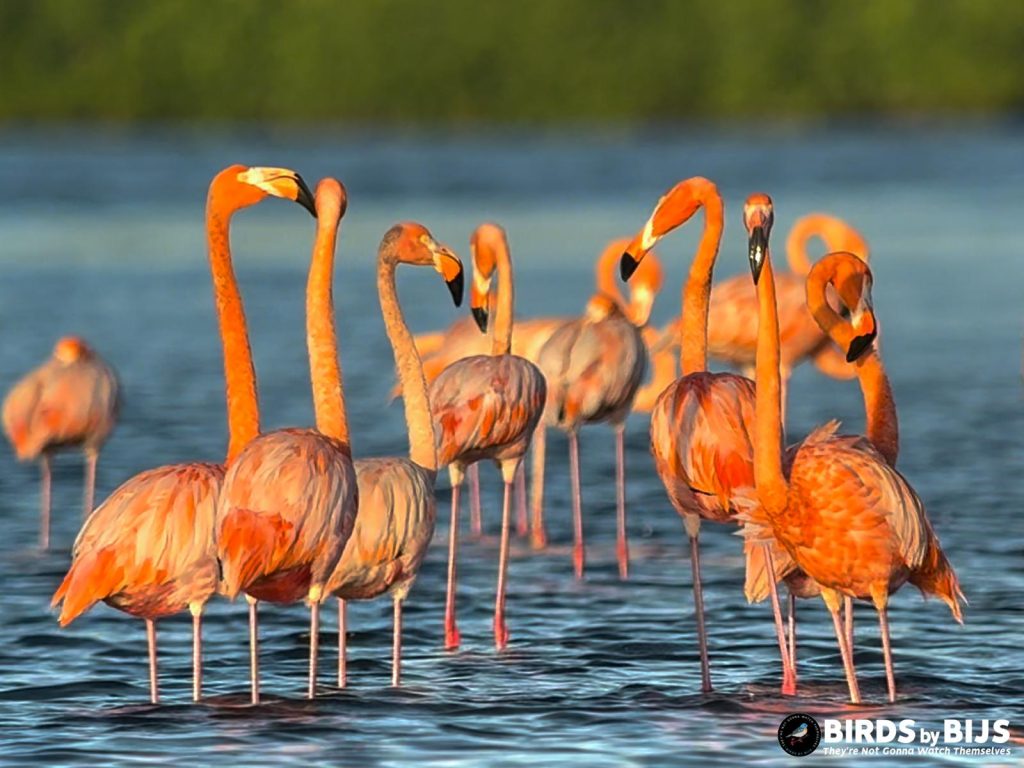
Caroni absolutely delivered. The evening spectacle featured nearly 170 American Flamingos and an estimated 800 Scarlet Ibises flying in to roost against an incredible sunset backdrop.
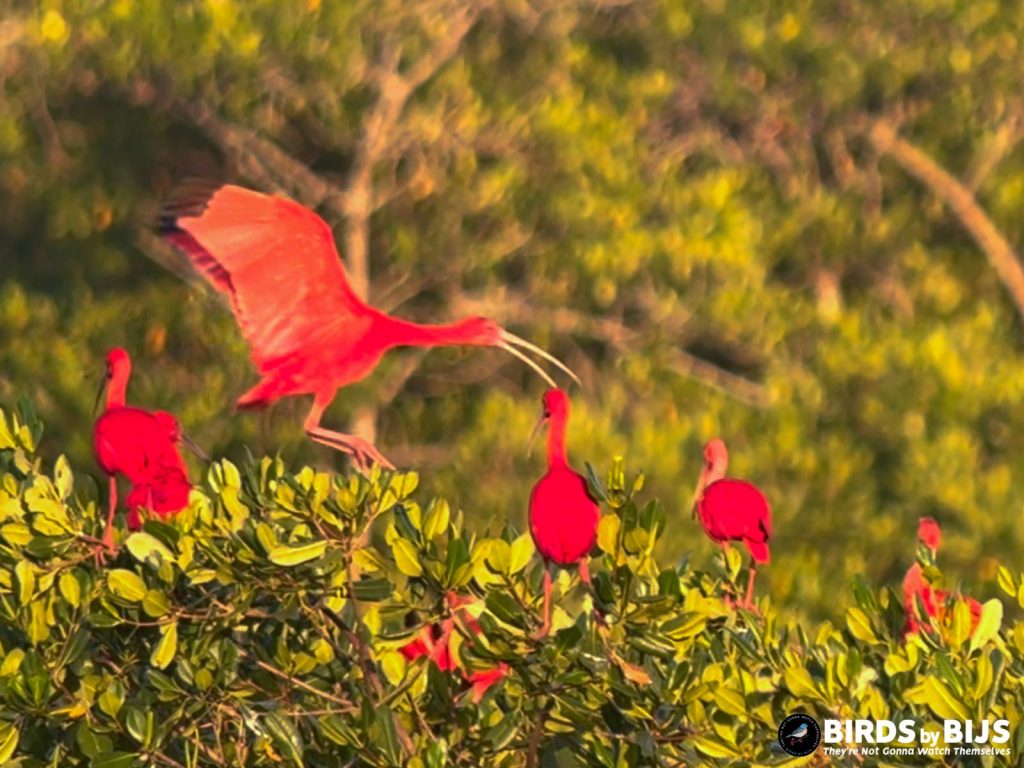
Additional highlights included Tricolored Heron, Yellow-crowned Night Heron, Osprey, Straight-billed Woodcreeper, Bicolored Conebill, and excellent looks at a perched Green-throated Mango along the mangrove edge. Watching the swamp come alive at sunset was the perfect way to end another fantastic day in Trinidad.
Day 5 – Northeastern Trinidad & Hummingbird Garden
Today moved at a much more relaxed pace after our full-on day yesterday. We enjoyed a slower morning with a sleep-in breakfast and some casual birding around the lodge grounds before loading up and heading toward the northeastern corner of Trinidad.
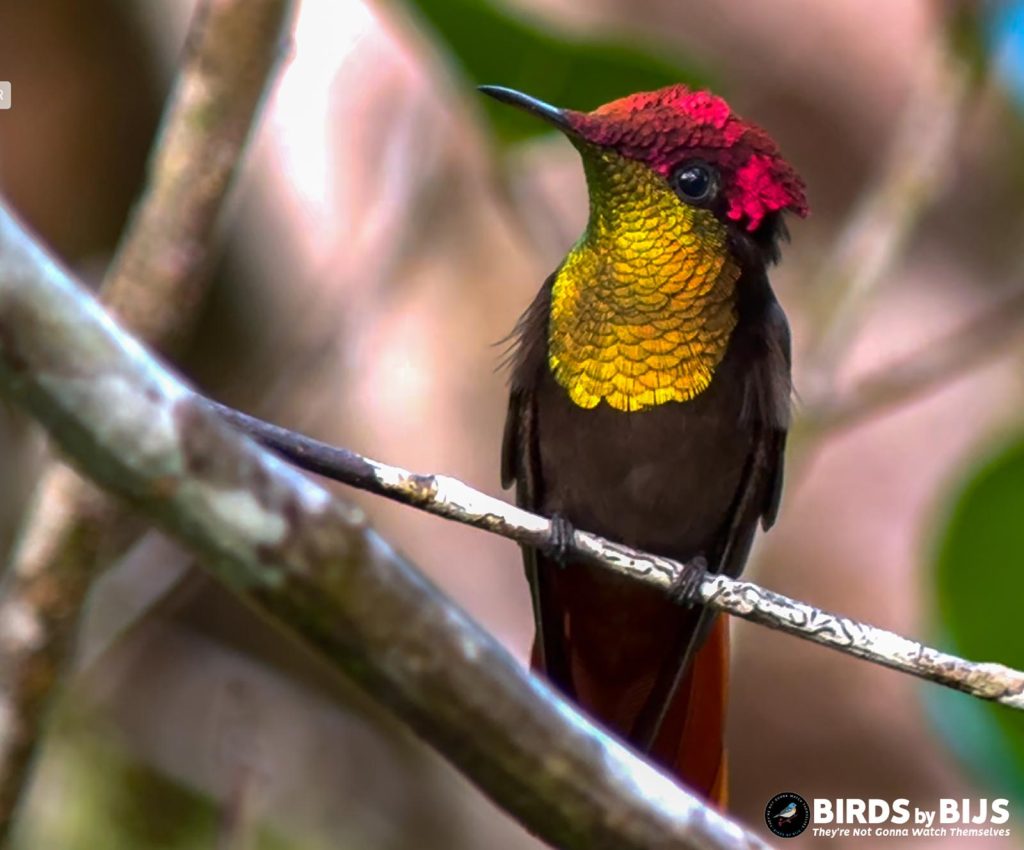
Along the way, we stopped at an incredible hummingbird garden and bird sanctuary that absolutely stole the show. In total, we recorded 11 species of hummingbirds, with standout sightings including prolonged, close views of an adult male Tufted Coquette and the always dazzling Ruby-topaz Hummingbird. These were easily our best looks of the trip so far and fantastic opportunities for photography.
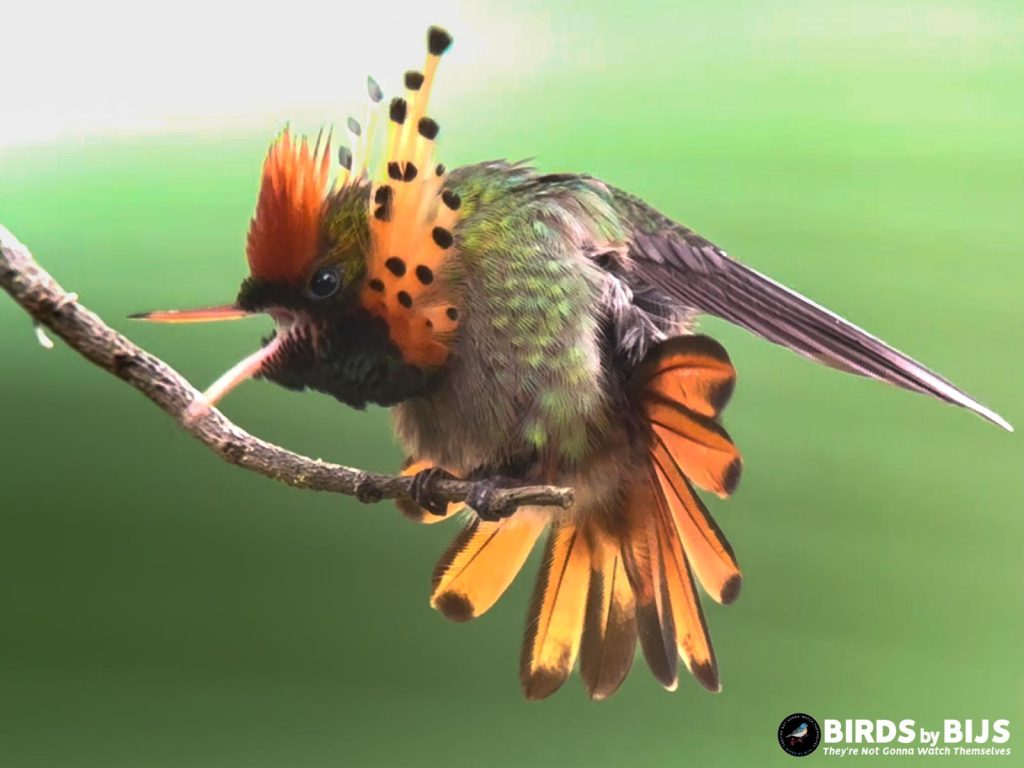
Other hummingbird highlights included Long-billed Starthroat, Green Hermit, Rufous-breasted Hermit, and the tiny Little Hermit, which eventually gave us excellent views perched just inches above the forest floor, a unique sight and behavior for any hummingbird.
The surrounding forest was equally active, with distant calls and sightings of Channel-billed Toucan, both Violaceous and Guianan Trogons, Lineated Woodpecker, and flyover Blue-headed Parrots. We also picked up species like Golden-fronted Greenlet, Long-billed Gnatwren, Tropical Parula, Red-legged Honeycreeper, Green Honeycreeper, and a particularly nice sighting of Blue Dacnis.
By evening, we arrived along Trinidad’s beautiful northeastern coast near Grande Riviere, settling in just in time for sunset and a delicious dinner overlooking the Caribbean. We wrapped up the evening going over plans for tomorrow and enjoying the slower pace after another excellent day of birding.
Day 6 – Trinidad Piping-Guan & Grande Riviere
Today began with an early breakfast followed by one of the major targets of the tour: the critically endangered and endemic Trinidad Piping-Guan, locally known as the “Pawi.” Once widespread across Trinidad’s forests, the species suffered severe declines due to habitat loss and hunting pressure, and today only a small population remains in the island’s remote northeastern forests.
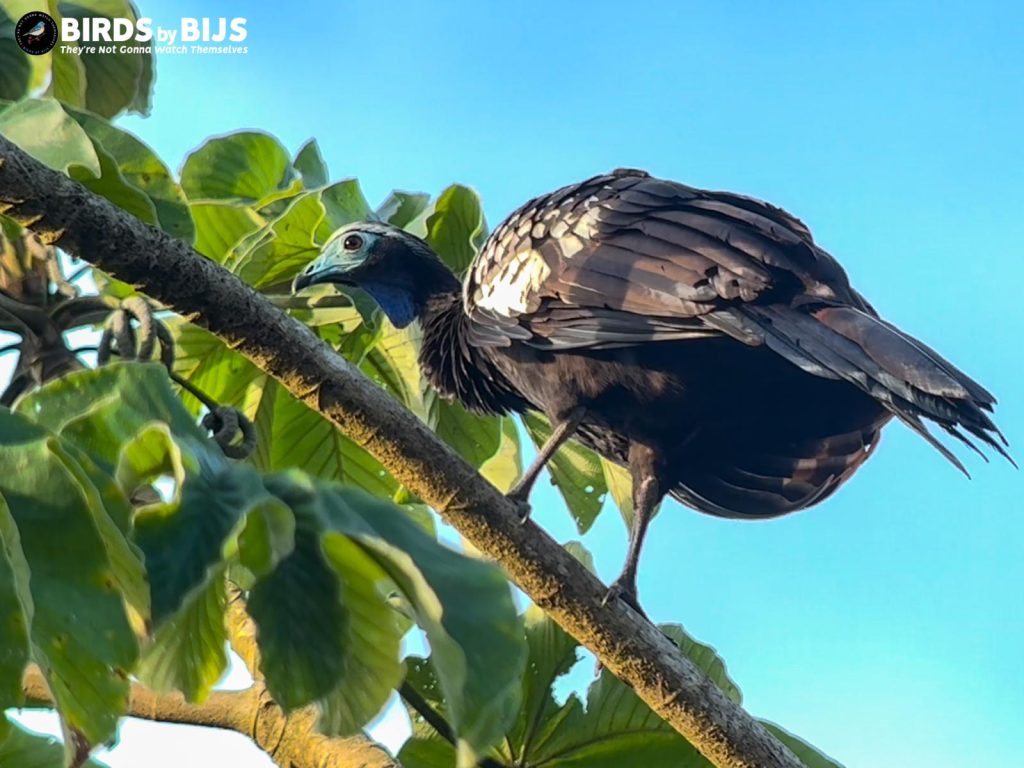
Thankfully, our morning search was a huge success. Just minutes from our lodge, we connected with four different Trinidad Piping-Guans, including incredible observations of the birds visiting bromeliads to drink water. It was a unique behavior and an unforgettable encounter with one of the Caribbean’s rarest birds.
The morning also produced a great supporting cast of species, including Tufted Coquette, Copper-rumped Hummingbird, and Ruby-topaz Hummingbird. Overhead, we watched Swallow-tailed Kite, Common Black Hawk, and an impressive adult Black Hawk-Eagle soaring above the forest.
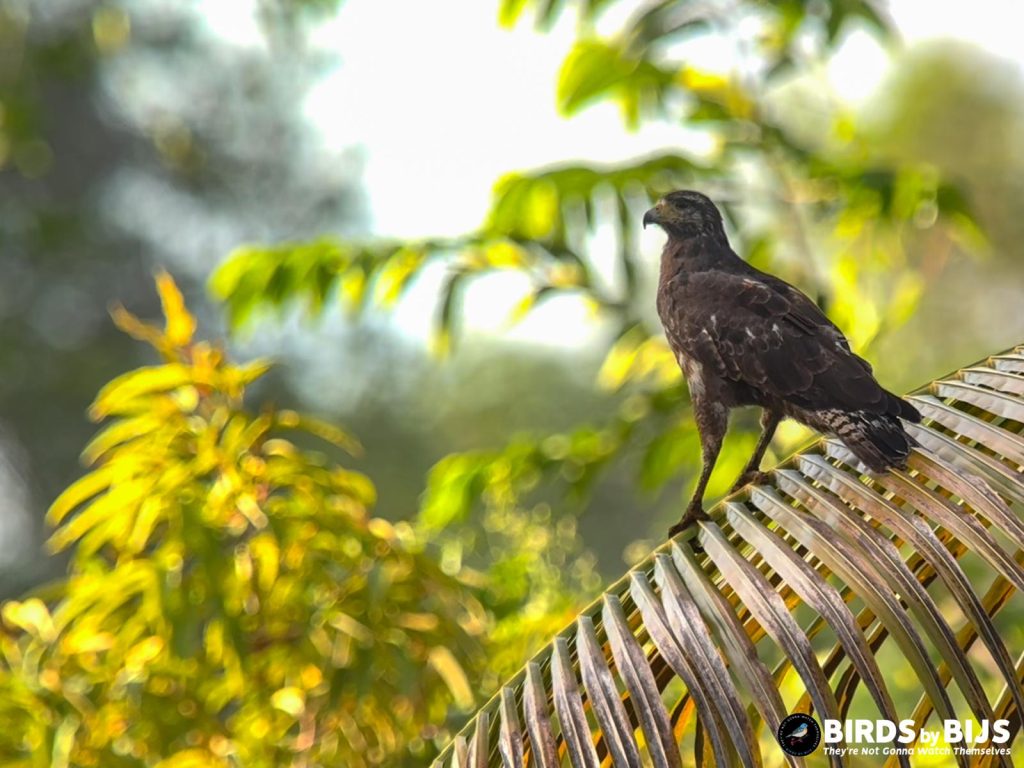
Along the trails, we added several excellent forest birds, including White-flanked Antwren, Silvered Antbird, Forest Elaenia, Ochre-lored Flatbill, and singing Tropical Parulas overhead.
During the afternoon, the group enjoyed a private chocolate-making tour with a local artisanal chocolatier, learning about cacao cultivation and the traditional process of producing chocolate here in Trinidad. It was a perfect way to escape the midday heat while experiencing another side of the island’s culture.
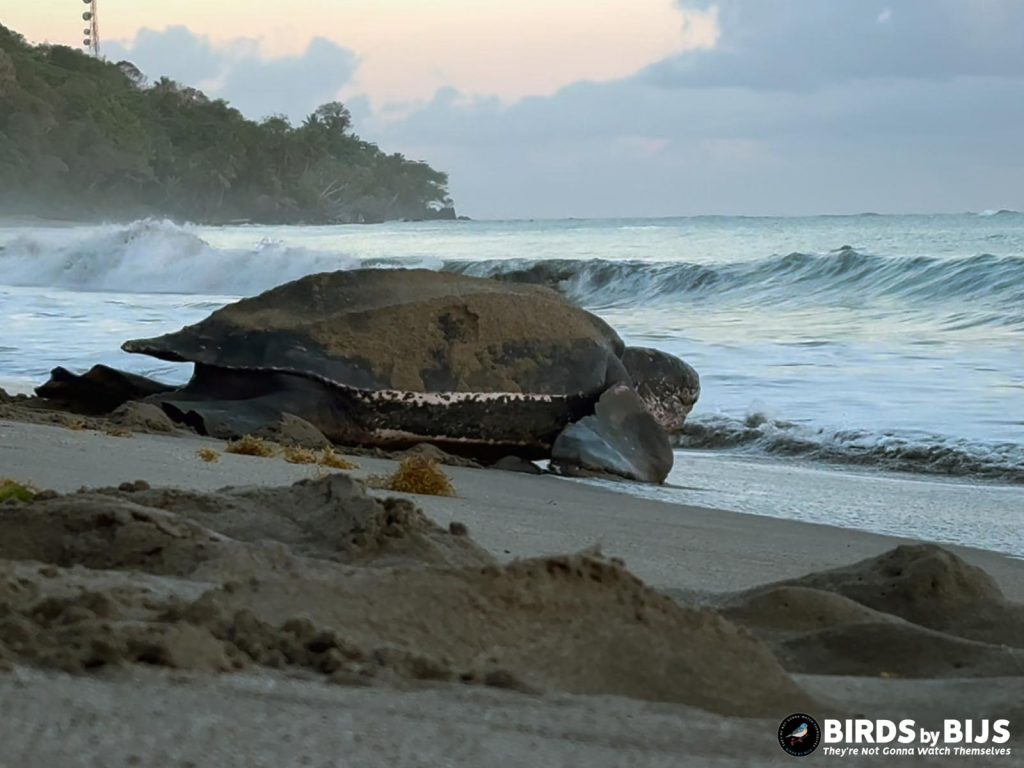
In the evening, we headed down to the beach for an unforgettable turtle-watching experience. Grande Riviere is one of the most important nesting beaches in the world for Leatherback Sea Turtles, where adult females return to their natal beaches each spring to lay eggs. Watching these massive turtles emerge from the surf under the cover of darkness was an incredible way to close out another memorable day in Trinidad.
Day 7 – Tobago Arrival & Wetlands
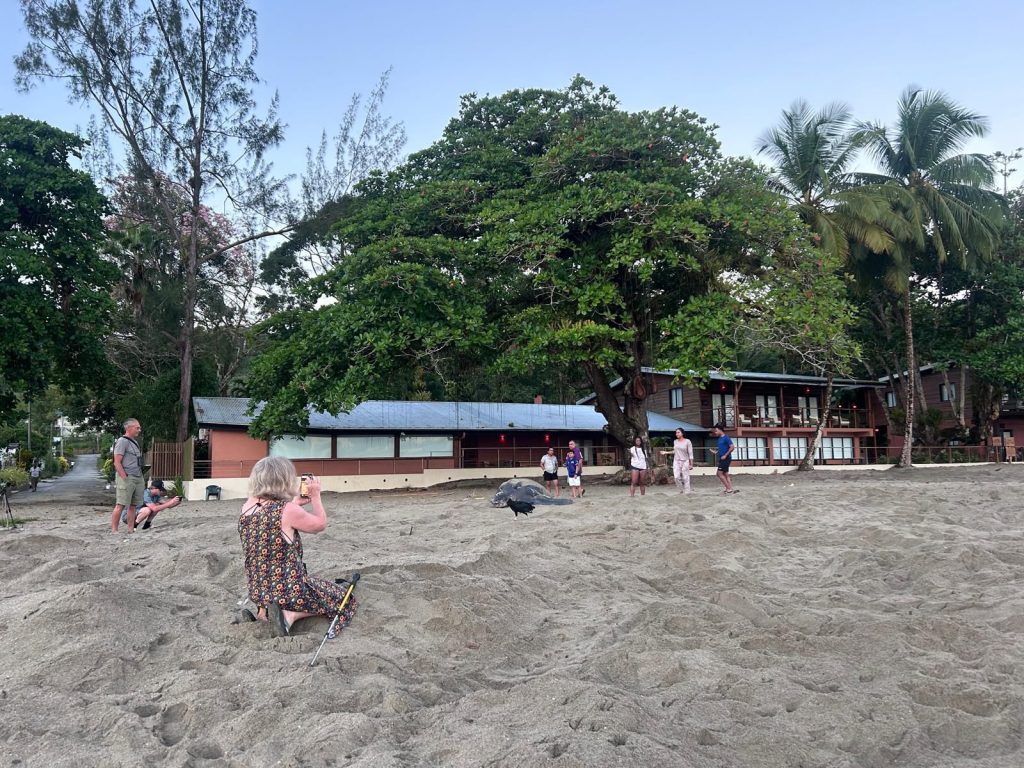
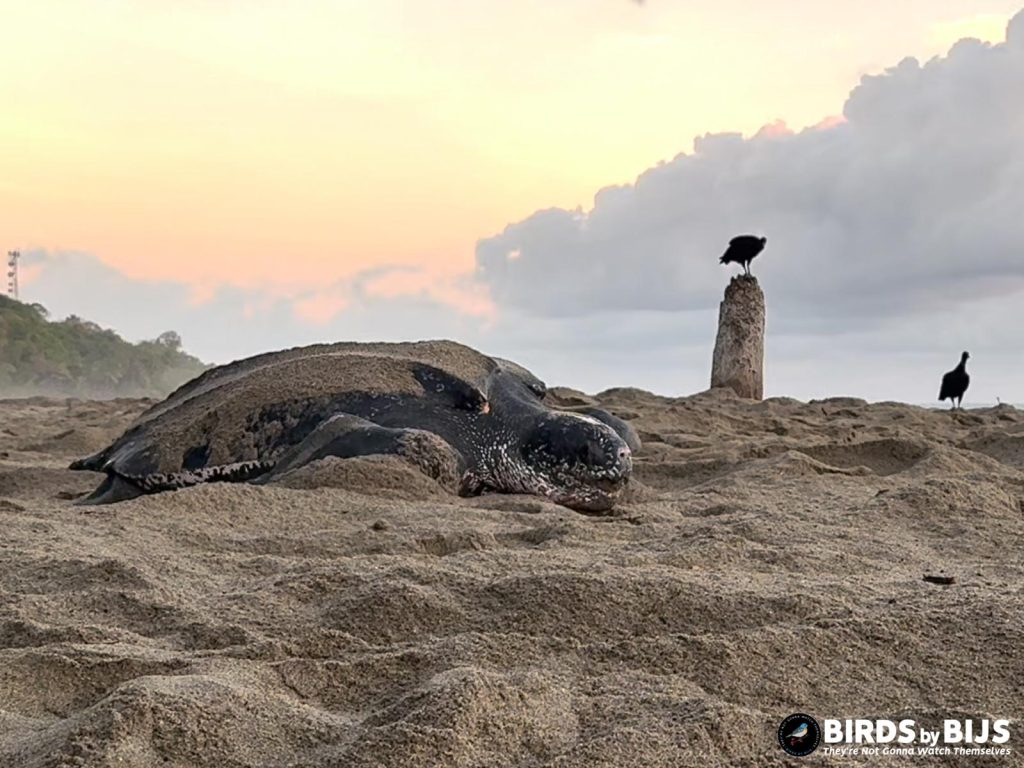
The morning began with another early visit to the beach for those wanting one more chance with the nesting sea turtles, and it absolutely paid off. Just after sunrise, several massive Leatherback Sea Turtles were still on the beach finishing their nesting activities. We had incredible views of females covering their nests and slowly returning to the sea, and for many in the group, it became one of the most unexpectedly moving experiences of the trip.
After breakfast, we departed Grande Riviere and traveled back to Port of Spain, then took a short flight to Tobago. Upon arrival, we met our local guide and driver and immediately began birding a series of wetland sites around the island.
Highlights from the first stop included flocks of Black-bellied Whistling Ducks, numerous White-cheeked Pintails, vocal Rufous-vented Chachalacas, Anhinga, Tricolored Heron, Red-crowned Woodpecker, and overhead Caribbean Martins and a migrating Willet.
Additional wetlands added Blue-winged Teal and Green-winged Teal, allowing for some excellent side-by-side comparisons of these similar species in the field. Other highlights included Purple Gallinule, Common Gallinule, White-winged Swallow, several Bank Swallows, and impressive numbers of White-cheeked Pintails, with at least 85 counted.
By evening, we made our way along Tobago’s beautiful Caribbean coastline to Speyside, arriving just after sunset and settling in for a fantastic dinner at Blue Waters Inn overlooking the sea.
Day 8 – Main Ridge Forest Reserve & Little Tobago
Today kicked off with an early departure and boxed breakfasts in hand as we made our way toward Tobago’s legendary Main Ridge Forest Reserve, the oldest legally protected forest reserve in the Western Hemisphere.
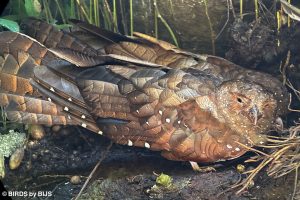
Along the drive, we were treated to incredible views of a Common Potoo and its chick perched perfectly along the roadside. With their cryptic plumage and motionless posture, potoos are masters of camouflage, and seeing both an adult and juvenile together was a truly special encounter. Other highlights before reaching the reserve included Rufous-breasted Hermit and our first stunning looks at Trinidad Motmot, whose iridescent plumage and racketed tail feathers immediately impressed the group.
Birding in the Main Ridge Reserve was excellent throughout the morning, producing specialties such as White-tailed Sabrewing, Golden-olive Woodpecker, Olivaceous Woodcreeper, Cocoa Woodcreeper, Venezuelan Flycatcher, and fantastic scope views of displaying Blue-backed Manakins at a lek. Additional highlights included Great Black Hawk, Collared Trogon, Plain Antvireo, Giant Cowbird, and a partially leucistic Yellow-legged Thrush that provided an especially memorable sighting.
After lunch back at the lodge, we headed out again for an afternoon boat trip to Little Tobago Island. The boat ride itself was full of seabirds, including Bridled Tern, Sooty Tern, Brown Noddy, and Laughing Gull.
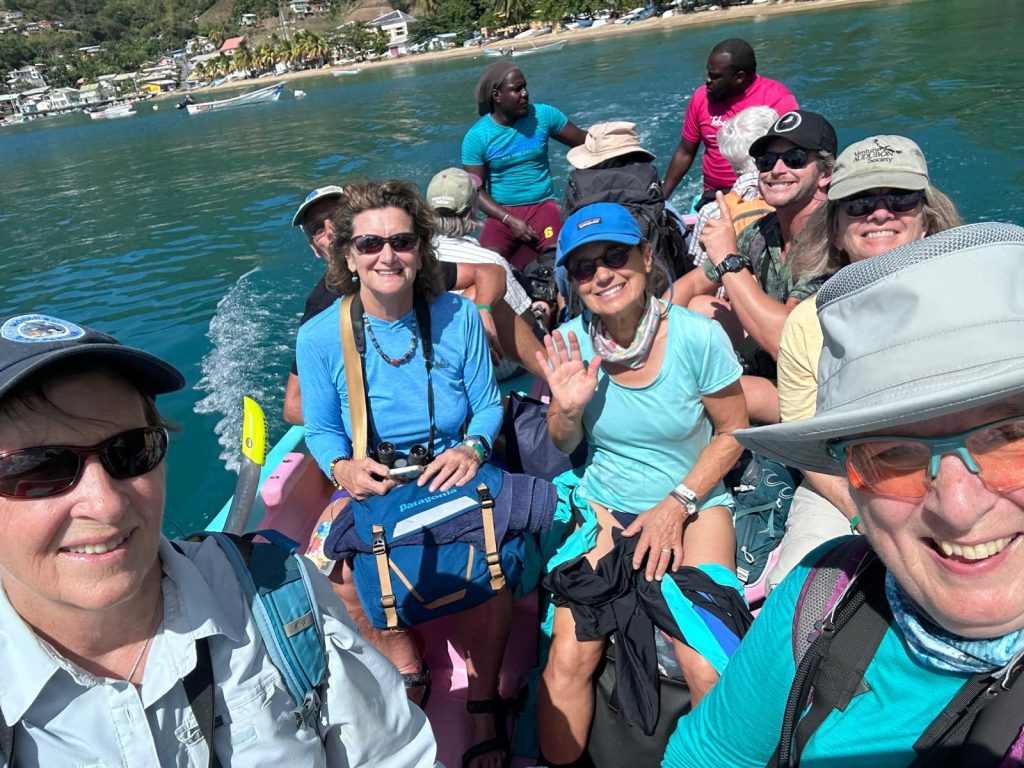
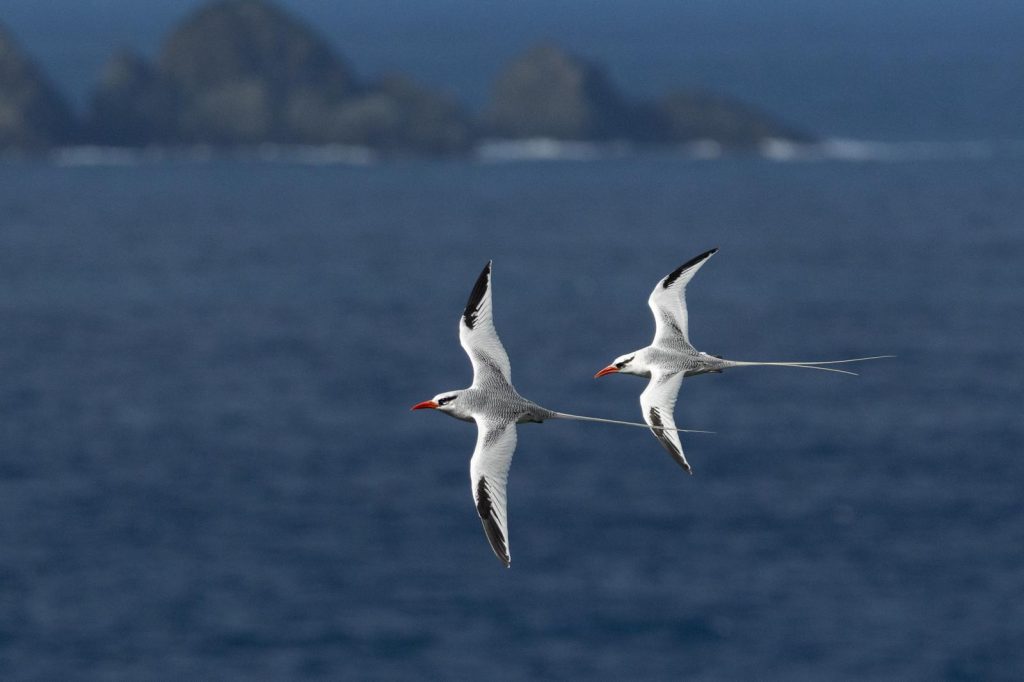
Once on Little Tobago, we hiked up through the island’s dry forest, spotting species like Scaled-naped Pigeon, Brown-crested Flycatcher, and Black-faced Grassquit before reaching breathtaking overlooks above the Caribbean Sea. From there, we enjoyed unforgettable views of nesting Red-billed Tropicbirds, Brown Boobies, and Red-footed Boobies,including several tropicbird chicks visible on their nests below us.
We wrapped up the evening with a relaxing glass-bottom boat ride back to Blue Waters Inn, learning about the local coral reef ecosystem as the sun dipped low over Tobago’s coast.
Day 9 – Tobago Coast & St. Giles Island
Today on Tobago started at a relaxed pace, with some casual birding around the lodge grounds before heading over to Flagstaff Hill near Charlotteville. From the overlook, we enjoyed beautiful views across the Caribbean while picking up species like Red-legged Honeycreeper feeding in Cecropia trees, a soaring Great Black Hawk, and several Caribbean Martins foraging below the ridge.
Another scenic stop overlooking Man O’ War Bay produced Royal Tern, Brown Booby, and nearly 70 Laughing Gulls following local fishing boats returning to shore.
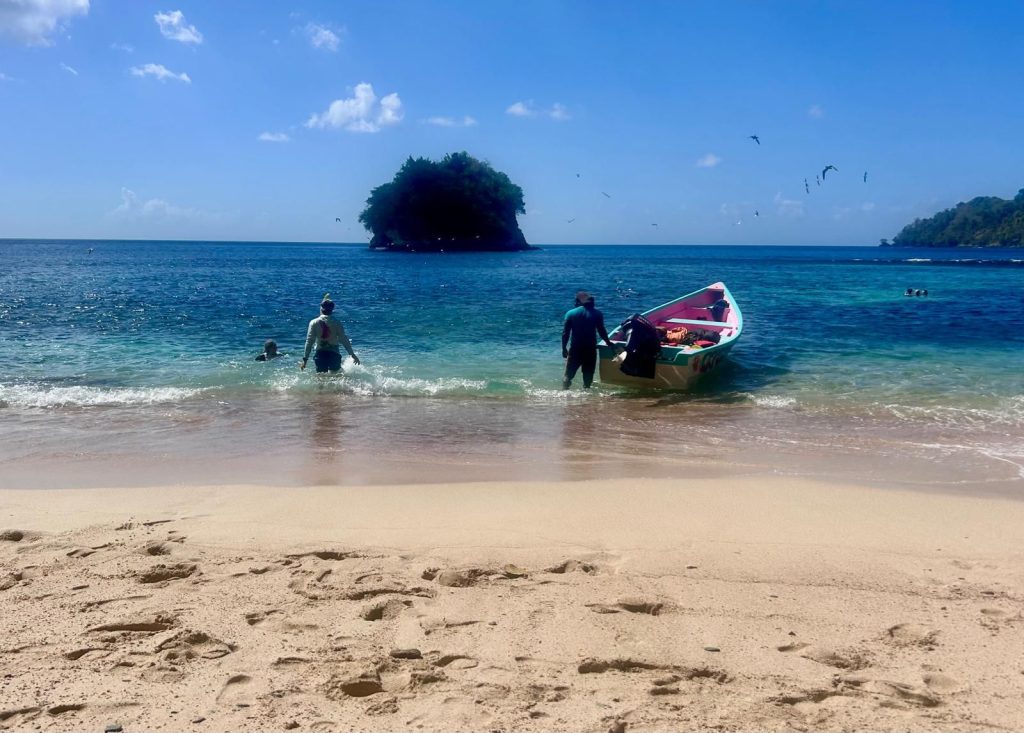
The afternoon featured snorkeling, swimming, relaxing on incredible beaches, and taking in Tobago’s stunning coastline. Later in the day, we headed out by boat to one of the newest additions to our itinerary: St. Giles Island, home to one of the Caribbean’s largest nesting colonies of Magnificent Frigatebirds.

The boat ride along the rugged coast was spectacular, with huge numbers of seabirds active around the cliffs, including over 100 Brown Noddies, 100+ Bridled Terns, around 150 Roseate Terns, and roughly 26 Sooty Terns. The frigatebird colony itself was immense, with an estimated 4,000+ Magnificent Frigatebirds circling overhead and roosting across the island.
As if that wasn’t enough, the return crossing brought another unforgettable sight: more than 400 Red-footed Boobies flying back toward St. Giles in large evening flocks to settle in for the night.

Back on the mainland, a few of us still had some energy left for one final birding outing, and we headed out after dark in search of White-tailed Nightjar. We connected quickly, enjoying excellent looks at this nocturnal species as it hunted insects near roadside lights, a perfect ending to another incredible day on Tobago.
Day 10 – Final Day
Today marked the final day of another incredible BIRDS by BIJS adventure through Trinidad & Tobago. After a relaxed breakfast overlooking the Caribbean Sea at Blue Waters Inn, some participants chose to extend their stay in Tobago for a few extra days of island time, while others began their journey home with transfers from Tobago to Trinidad and onward to their final destinations.

All in all, the tour was an outstanding success. We explored an incredible diversity of habitats across both islands, connected with nearly 200 species of birds, and experienced everything from hummingbird gardens and rainforest trails to seabird colonies, nesting Leatherback Sea Turtles, and unforgettable Caribbean sunsets. Most importantly, the group shared a fantastic time filled with great birding, good food, and plenty of laughs along the way.
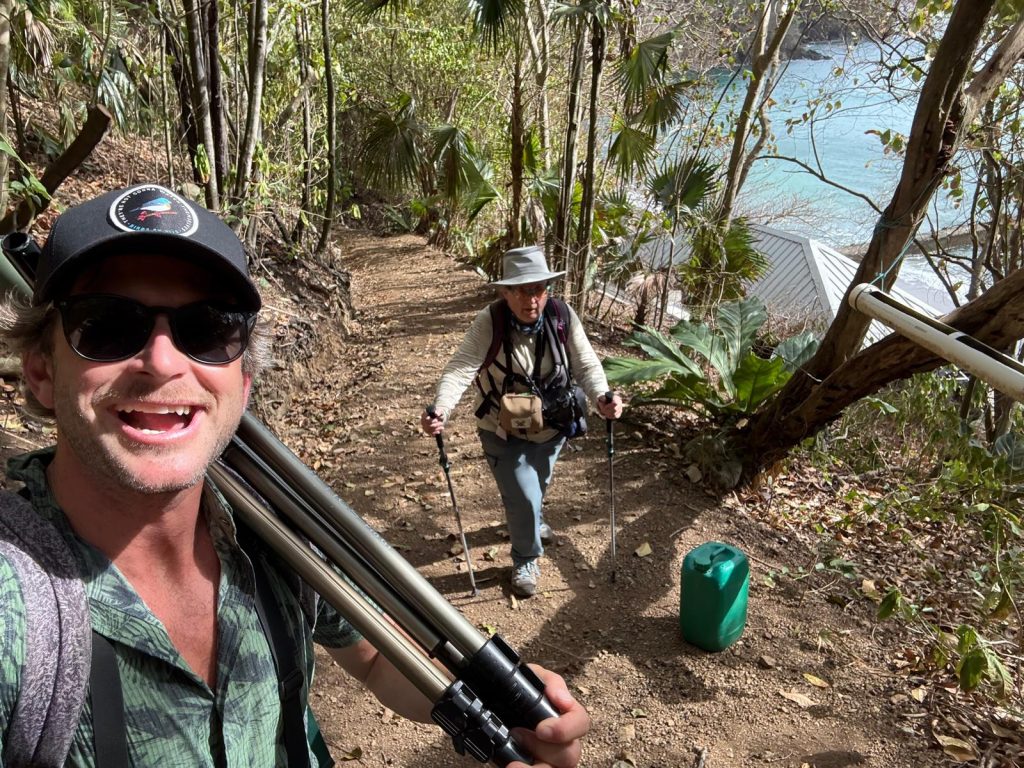
We’re already looking forward to next year’s adventure. Join us December 3–13, 2027, for another unforgettable Birds & Beaches experience in Trinidad & Tobago!
2027 Trinidad and Tobago Departures!