Gold-ringed Tanager: Colombia's Most Coveted Endemic Bird
Some birds are beautiful.
Others become destinations.
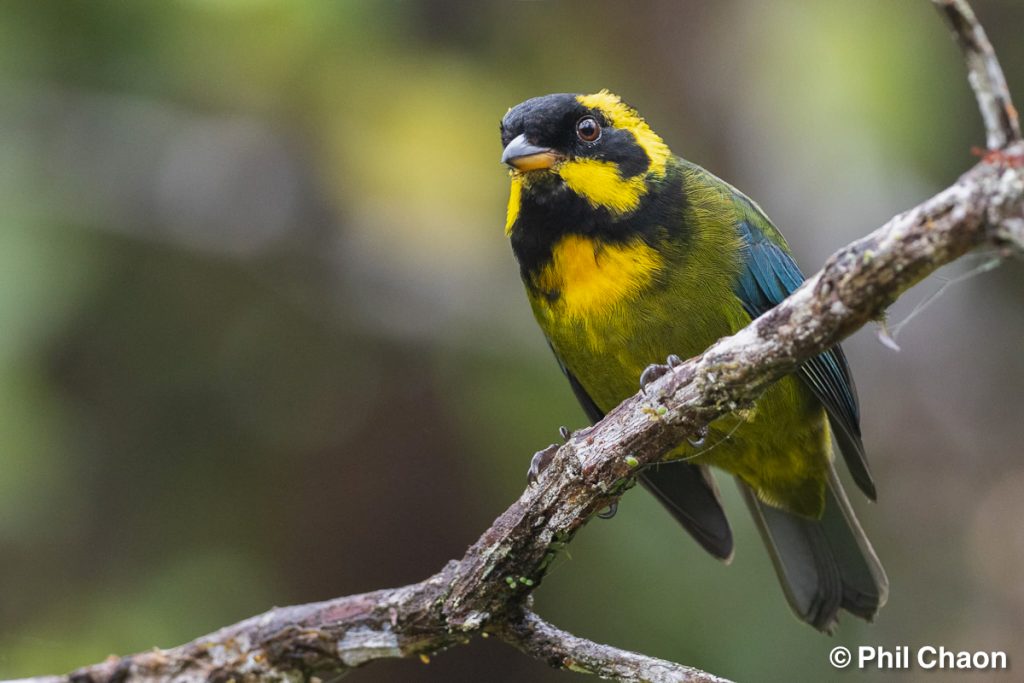
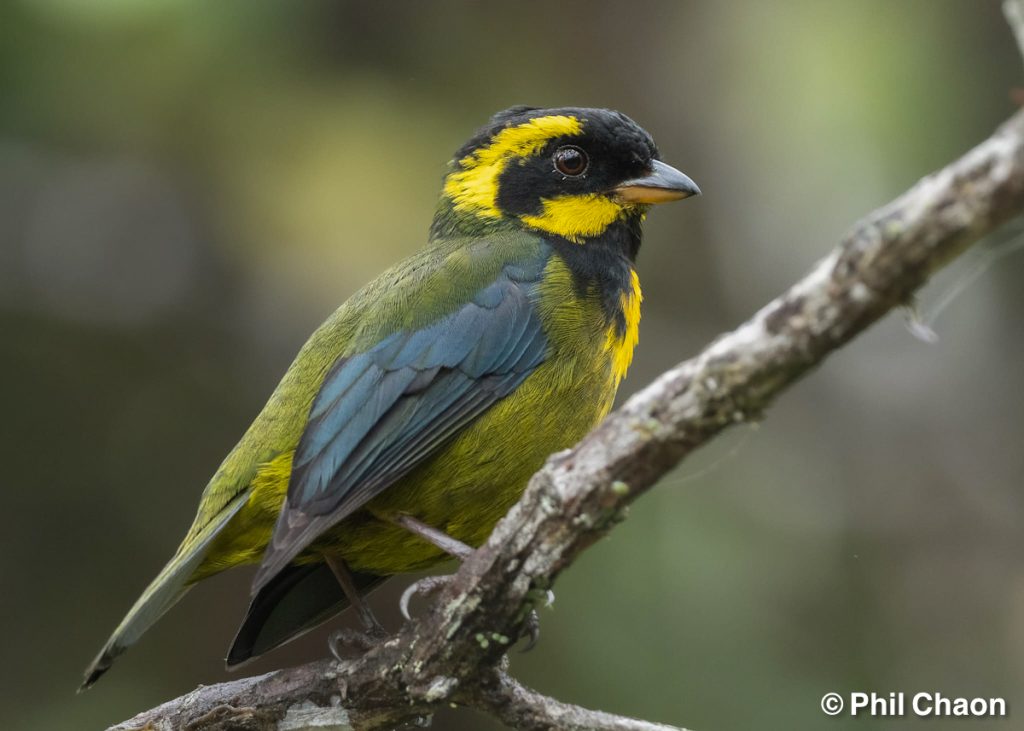
The Gold-ringed Tanager (Bangsia aureocincta) is one of them.
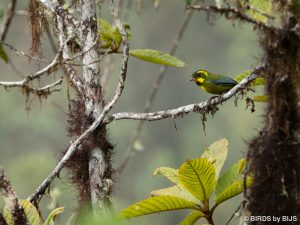
Found nowhere else on Earth, this spectacular bird lives only in a narrow band of cloud forest along Colombia’s Western Andes. Every year, birders cross oceans for the chance to glimpse it among moss-covered branches dripping with orchids and bromeliads.
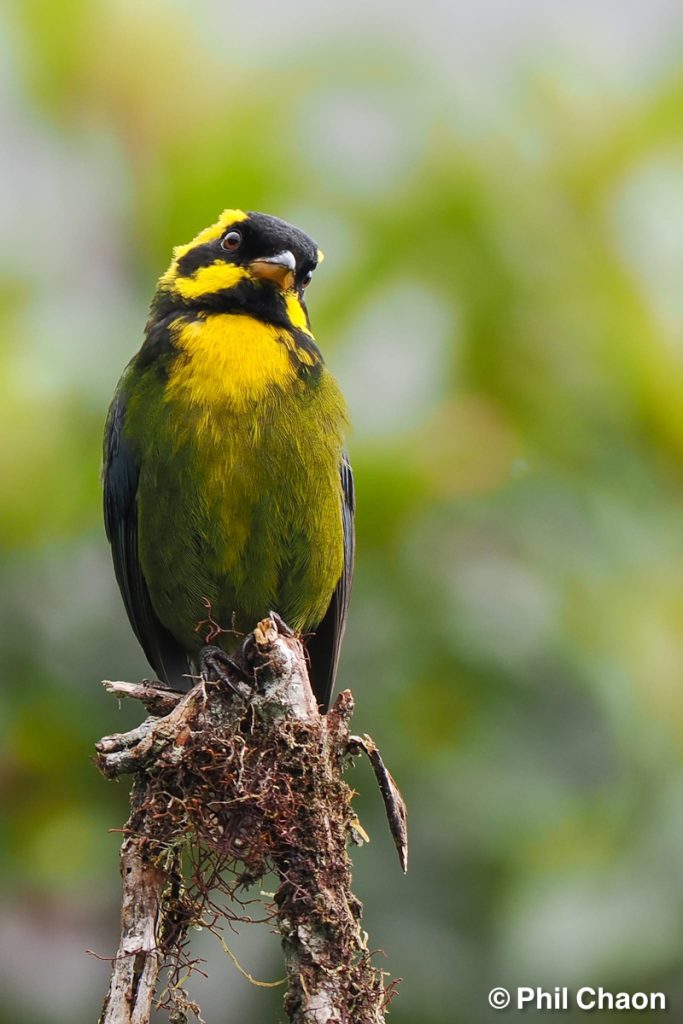
Its scientific name tells part of the story. Bangsia honors American ornithologist Outram Bangs, while aureocincta means “golden-banded,” describing the glowing golden rings framing its otherwise velvety-black face.
"At the top of Colombia's most-wanted list, the Gold-ringed Tanager is arguably the hottest of the country's roughly 83 endemic birds."
Why is it found only in Colombia?
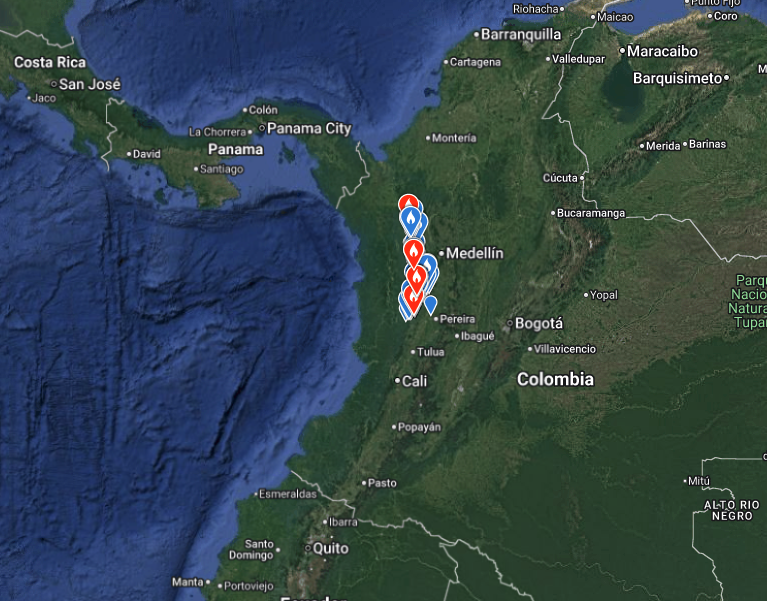
The Gold-ringed Tanager isn’t rare by accident.
It’s the product of millions of years of evolution.
As the Andes rose, they divided forests into isolated mountain ranges separated by deep valleys. Populations that were once connected became isolated from one another, slowly evolving into new species uniquely adapted to their own mountains.
The Gold-ringed Tanager is one of those evolutionary success stories.
Today, every individual on Earth lives within a relatively small stretch of Colombia’s Western Andes, primarily between 1,350 and 2,200 meters (4,400–7,200 feet).
Its entire world fits inside one corner of one country.
"The Gold-ringed Tanager isn't rare because people don't look hard enough. It's rare because evolution built it for one small corner of Colombia."
A masterpiece hidden in plain sight
For such a brilliantly colored bird, the Gold-ringed Tanager can be remarkably difficult to find.
Unlike many tanagers that travel in noisy mixed-species flocks, this species often forages quietly, moving through moss-covered branches in pairs or alone as it searches for fruit, insects, flower buds, and other small prey.
The irony is almost comical.
A bird painted with glowing gold somehow disappears into a sea of green.
It takes only one step behind a curtain of moss or bromeliads before it vanishes completely.
Sometimes the brightest birds are among the hardest to see.

Welcome to one of the greatest birding hotspots in the Neotropics
Our search begins at Montezuma Rainforest Lodge, where we spend several nights during our Colombia: Western & Central Andes Birding Tour.
To birders, Montezuma needs little introduction.
Situated along the edge of Tatamá National Natural Park, where Colombia’s Western Andes merge with the extraordinarily diverse Chocó Bioregion, it has become one of the country’s premier birding destinations.
Nearly every bend in the road reveals a different forest community.
Drive a few hundred meters uphill and the temperature changes.
The vegetation changes.
The birds change.
Unlike the Amazon, where diversity stretches across vast horizontal forests, the Andes stack ecosystems vertically. Climbing a mountain is like traveling between entirely different worlds.
Few places demonstrate that better than Tatamá.
Recently, the lodge reached an international audience when CBS’s 60 Minutes filmed here, showcasing not only its extraordinary biodiversity but also the conservation efforts protecting one of Colombia’s richest remaining cloud forests.
For those of us who have guided here for years…
It was wonderful to see the rest of the world finally catch up.
"Montezuma isn't famous because of one bird. It's famous because few places on Earth offer so much world-class birding from one mountain road."
Every morning begins the same way
Before sunrise, the cloud forest begins to wake.
Coffee in hand, we step outside as hummingbirds buzz around flowering shrubs and the first mixed-species flocks begin moving through the trees.
By breakfast, we’ve often already seen dozens of species.
Then we climb.
Each increase in elevation introduces another community of birds, another set of specialties, another opportunity to encounter one of Colombia’s most coveted endemics.
The Gold-ringed Tanager is only one reason Montezuma has become legendary.
It’s simply one of the best.
"The best birding guides don't just know the birds. They understand how the forest is changing around them."
A flagship for conservation
The Gold-ringed Tanager is classified as Vulnerable, with an estimated global population of only 600–1,700 mature individuals.
Its future depends on forests like Tatamá.
Protecting these mountains doesn’t simply preserve one remarkable bird.
It safeguards an entire cloud-forest ecosystem filled with endemic plants, amphibians, mammals, insects, and dozens of birds found nowhere else on Earth.
Every visit demonstrates that intact forests have tremendous ecological—and economic—value.
Responsible birding helps ensure they remain standing.
"Protect the forest, and the Gold-ringed Tanager survives. Lose the forest, and the bird disappears with it."

Experience one of Colombia's greatest birding destinations
The Gold-ringed Tanager is one of the birds that draws people to Colombia.
Tatamá is one of the places that keeps them coming back.
Our Colombia: Western & Central Andes Birding Tour spends several days exploring the forests surrounding Montezuma Rainforest Lodge, giving guests exceptional opportunities to search for this remarkable endemic alongside dozens of Western Andes specialties.
When you finally watch a Gold-ringed Tanager emerge from the mist-covered canopy, it’s easy to understand why so many birders consider it one of the ultimate prizes in South America.
Continue Exploring
See This Bird on Tour
Explore Related Articles
- Andean Cock-of-the-rock: Colombia’s Most Spectacular Bird Performance
- Oilbird: The World’s Only Nocturnal Fruit-Eating Bird That
- Toucan Barbet: The Colorful Chocó Bird Caught Between Barbets and Toucans
Read Trip Reports