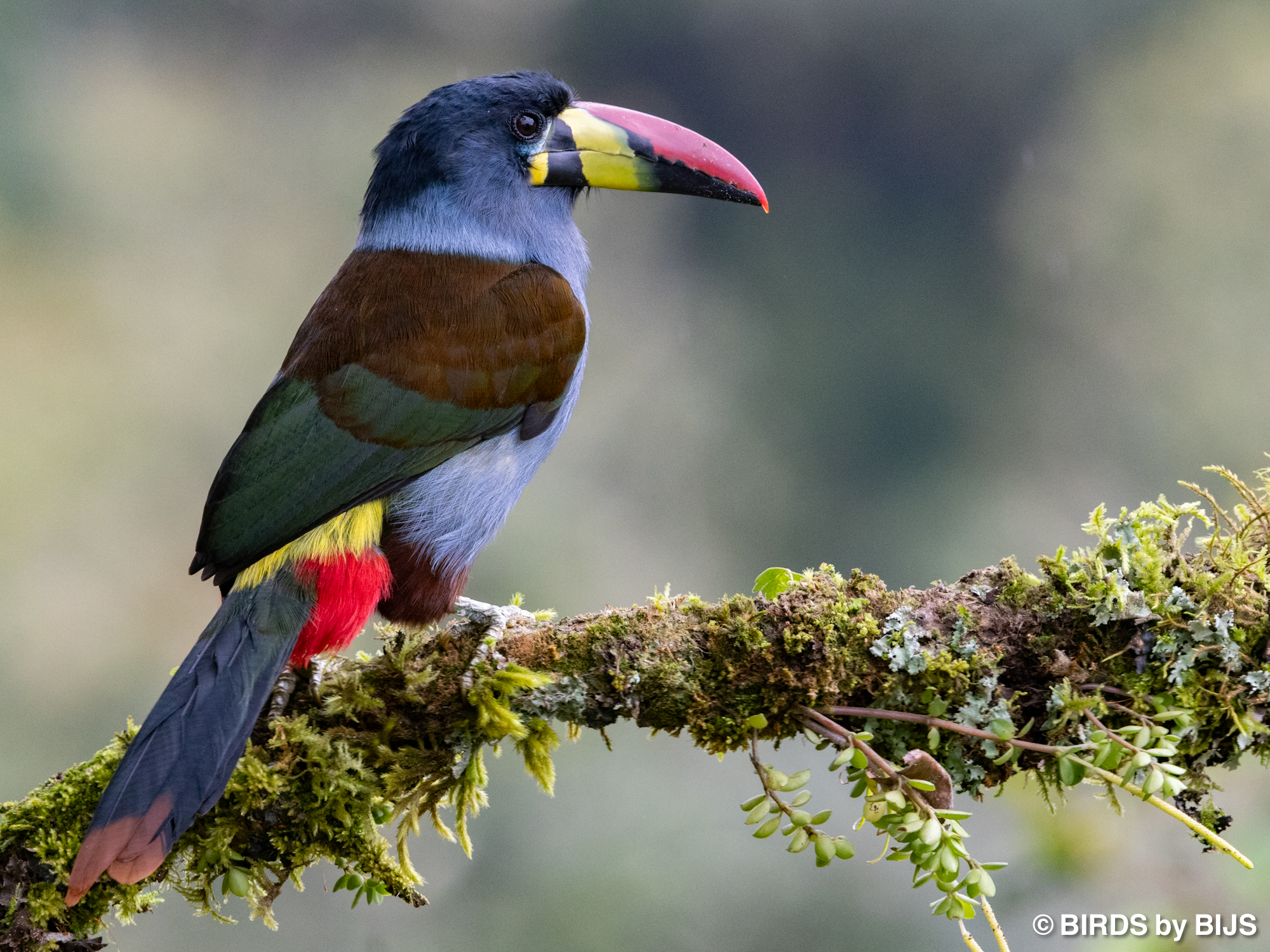

Mountain-Toucans: The High-Andes Giants That Left the Amazon Behind

Some birds make you wonder how they ever evolved.
Mountain-toucans make you wonder where they came from.
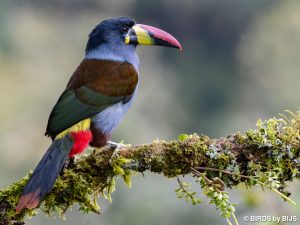
With their impossibly long tails, rainbow-colored bills, and clownish personalities, they look every bit the part of a tropical toucan. Yet instead of inhabiting the steamy Amazon rainforest like most of their relatives, mountain-toucans live thousands of feet higher, drifting through cool cloud forests wrapped in moss and mist.
They’re proof that evolution sometimes takes an unexpected path.
"Mountain-toucans didn't evolve in the Andes. Their ancestors climbed out of the Amazon."
What makes mountain-toucans unique?
- Among the highest-elevation toucans in the world
- Descended from lowland Amazonian toucan ancestors
- Exceptionally lightweight, hollow bills despite their enormous size
- Specialized cloud-forest fruit eaters that also consume insects, eggs, and small vertebrates
- Long tails help balance while moving through moss-covered branches
- Three spectacular species highlight our tours:
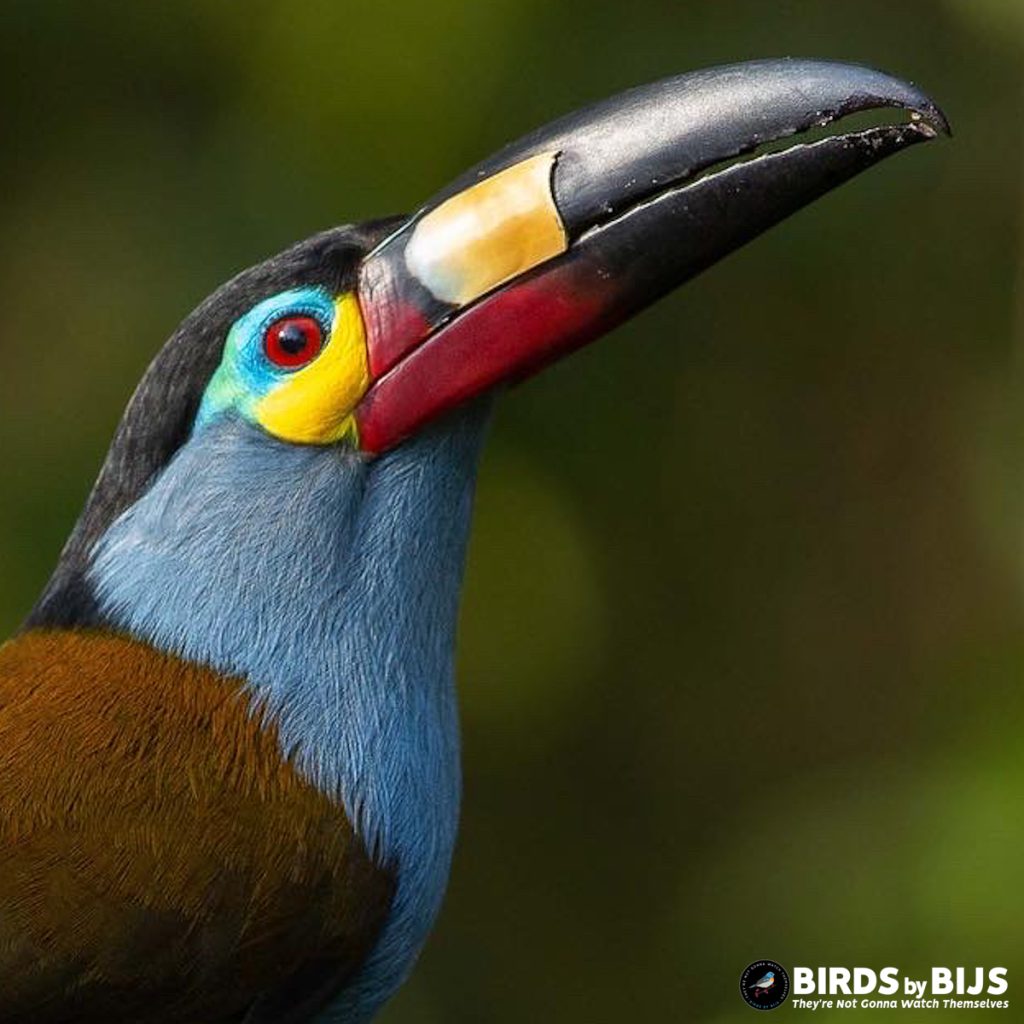
- Plate-billed Mountain-Toucan (Ecuador)
- Gray-breasted Mountain-Toucan (Colombia)
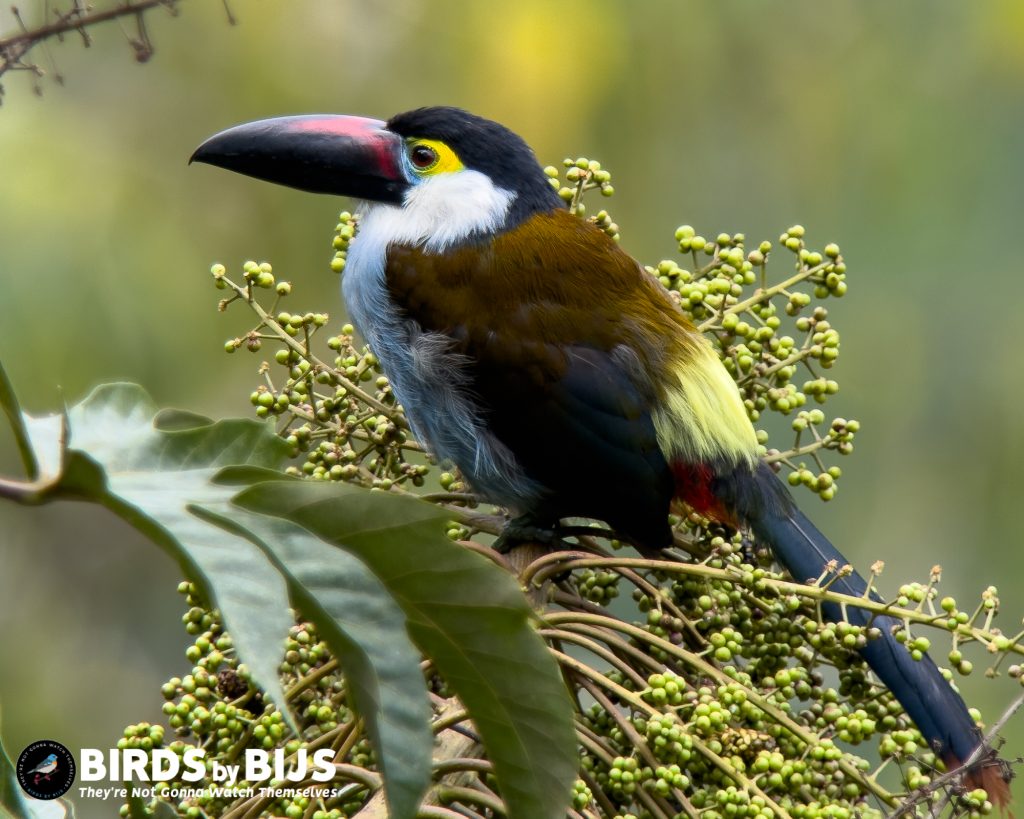
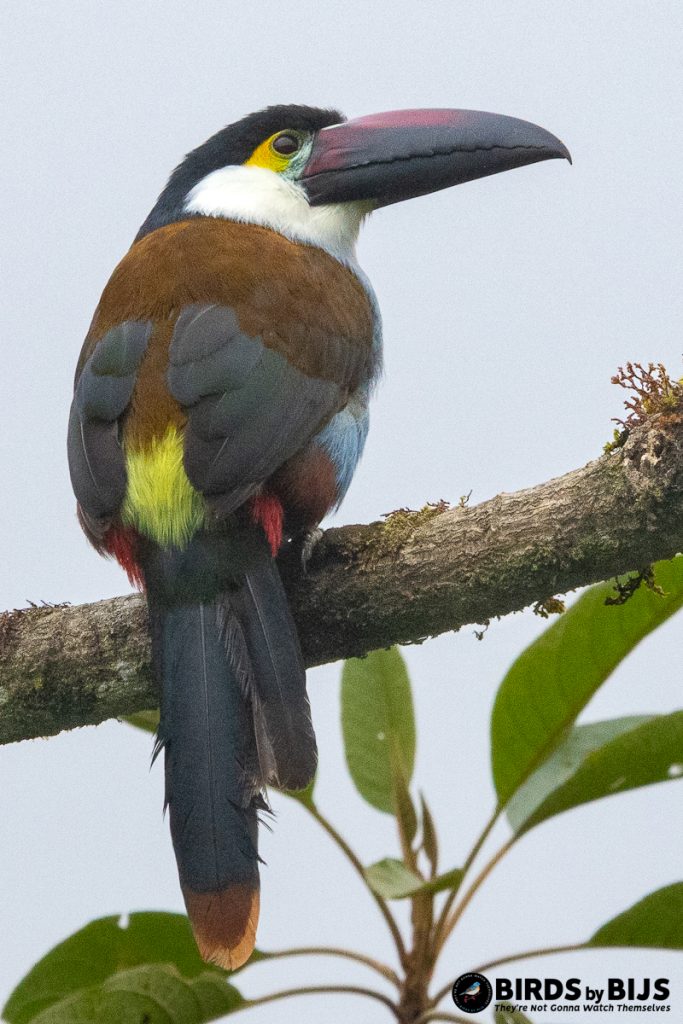
- Black-billed Mountain-Toucan (Colombia)
A toucan that climbed a mountain
When most people think of toucans, they picture the Amazon.
They’re not wrong.
Nearly every member of the toucan family evolved in warm tropical lowland forests.
But millions of years ago, as the Andes continued rising, some ancestral toucanets gradually expanded upslope into cooler environments.
Over countless generations, those isolated mountain populations changed.
Bodies became larger.
Tails grew longer.
Plumage diversified.
And eventually, a completely different branch of the toucan family emerged.
Today, mountain-toucans belong to the genus Andigena—literally meaning “born of the Andes.”
They remain closely related to the smaller green toucanets that still inhabit many tropical forests today, providing a fascinating glimpse into how geography drives evolution.
"Every mountain-toucan is a reminder that even familiar birds can reinvent themselves when evolution changes the landscape."
The bill shouldn't work...
Yet it works perfectly.
At first glance, a mountain-toucan’s bill looks impossibly heavy.
In reality, it’s one of nature’s engineering marvels.
Like other toucans, the bill is built from an intricate lattice of lightweight bone covered by keratin, making it remarkably strong while weighing far less than it appears.
That oversized bill allows mountain-toucans to reach fruit growing at the ends of slender branches that couldn’t support their weight.
It also helps manipulate food, defend territories, court potential mates, and may even play a role in regulating body temperature by releasing excess heat through its extensive network of blood vessels.
It’s one of the most versatile tools in the bird world.
"A mountain-toucan's bill looks like solid bone. In reality, it's mostly air."
More than fruit eaters
Mountain-toucans are best described as opportunistic omnivores.
Fruit makes up the majority of their diet, and in doing so they become important seed dispersers throughout the cloud forest.
Many large-fruited trees rely on birds like mountain-toucans to transport seeds far from the parent tree, helping regenerate healthy forests.
But fruit isn’t the whole story.
They also consume insects, nestling birds, eggs, lizards, and other small vertebrates whenever the opportunity presents itself.
For a bird that often appears gentle and almost cartoon-like…
They’re surprisingly efficient predators.
Three species. Two unforgettable destinations.
One of the joys of birding the Andes is realizing that different mountain ranges produce different mountain-toucans.
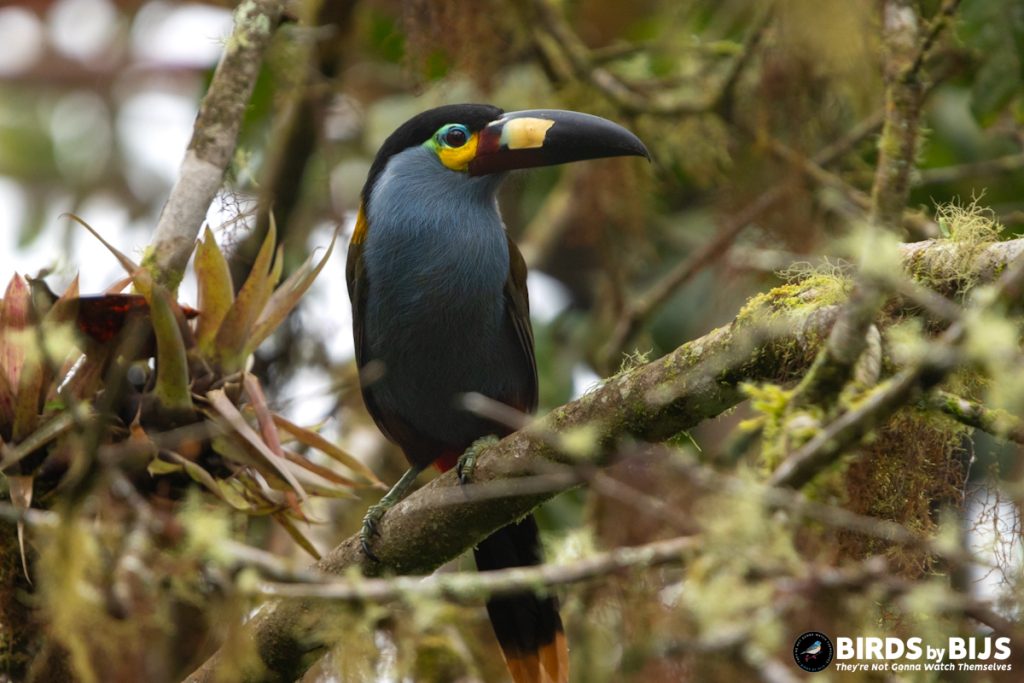
On our Ecuador: Northwest Andes & Eastern Foothills Birding Tour, we search for the spectacular Plate-billed Mountain-Toucan, arguably the most colorful member of the entire group. Its remarkable blue, green, yellow, and crimson bill has made it one of Ecuador’s most recognizable birds.
Our Colombia: Western & Central Andes Birding Tour introduces guests to two additional species.
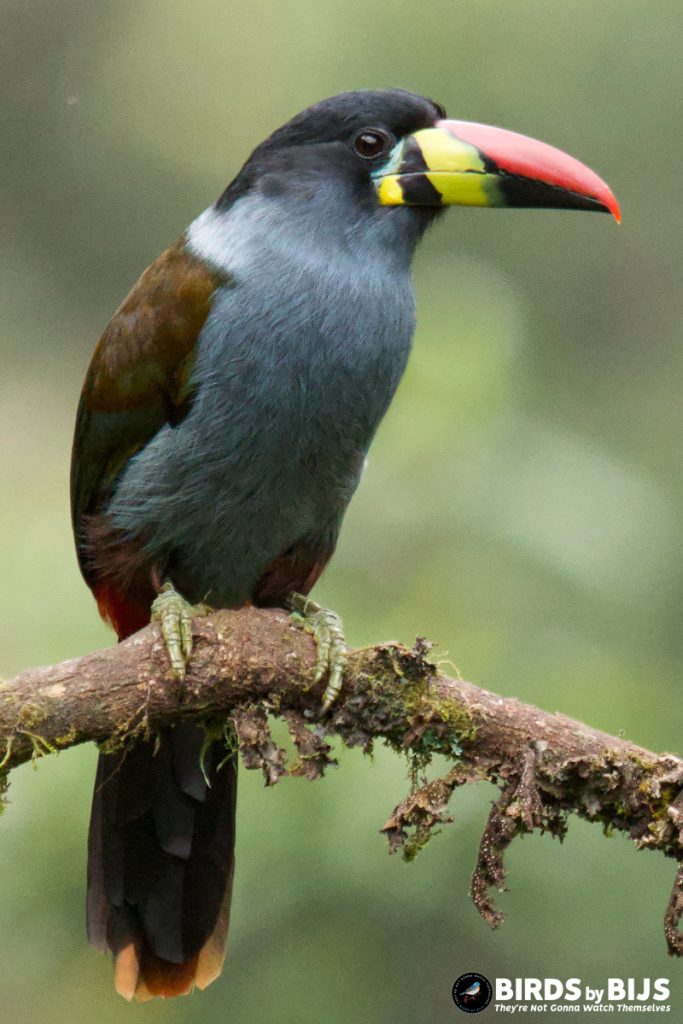
The elegant Gray-breasted Mountain-Toucan, with its distinctive powder-gray chest and vibrant bill, inhabits humid cloud forests throughout the Central Andes.
Meanwhile, the Black-billed Mountain-Toucan patrols the forests of Colombia’s Western Andes, where its rich chestnut underparts and dark bill distinguish it from its relatives.
Seeing all three provides a remarkable lesson in evolution.
They’re unmistakably mountain-toucans.
Yet each has adapted to its own corner of the Andes.
"One mountain range gave rise to three very different masterpieces."
Why cloud forests matter
Mountain-toucans exist because cloud forests exist.
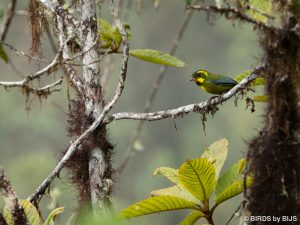
These cool, humid forests support an incredible diversity of fruiting trees, epiphytes, mosses, orchids, and bromeliads that simply cannot survive in warmer lowland forests.
Unfortunately, cloud forests are also among the most threatened ecosystems in the tropical Andes.
Agriculture, road construction, and habitat fragmentation continue reducing and isolating these forests.
Protecting mountain-toucans means protecting entire ecosystems—and thousands of other species that depend on the same mountains.
"Protect a cloud forest, and you protect far more than one spectacular bird."
Continue Exploring
See This Bird on Tour
- Ecuador: Northwest Andes & Eastern Foothills Birding Tour
- Colombia: Western & Central Andes Birding Tour
Explore Related Articles
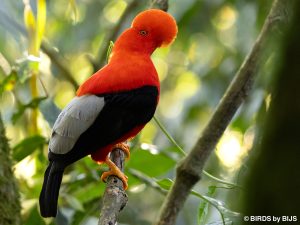
- Andean Cock-of-the-rock: Colombia’s Greatest Wildlife Performance
- Yellow-eared Parrot: Colombia’s Remarkable Conservation Success Story
Read Trip Reports