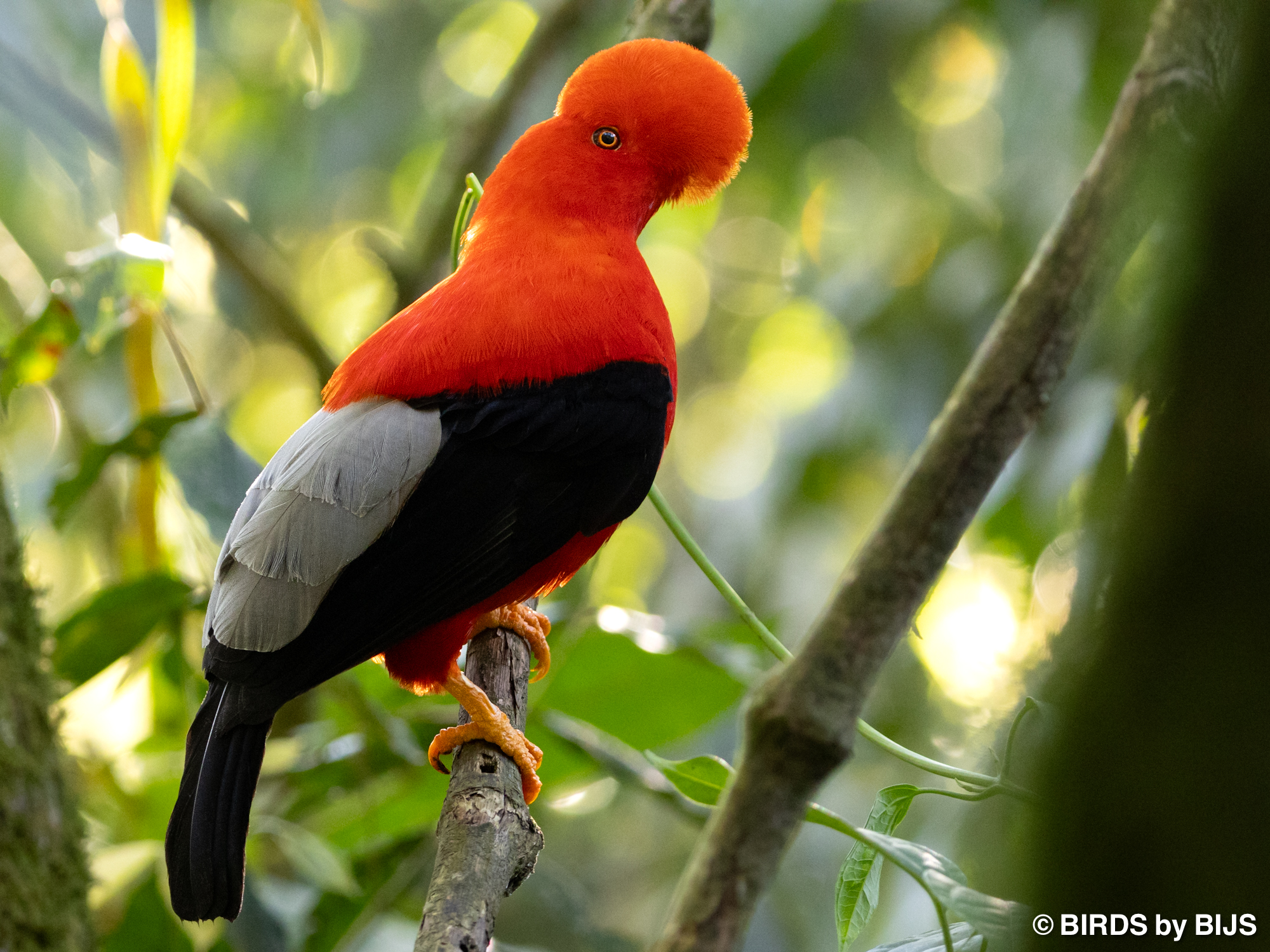

Andean Cock-of-the-rock: Colombia's Greatest Wildlife Performance
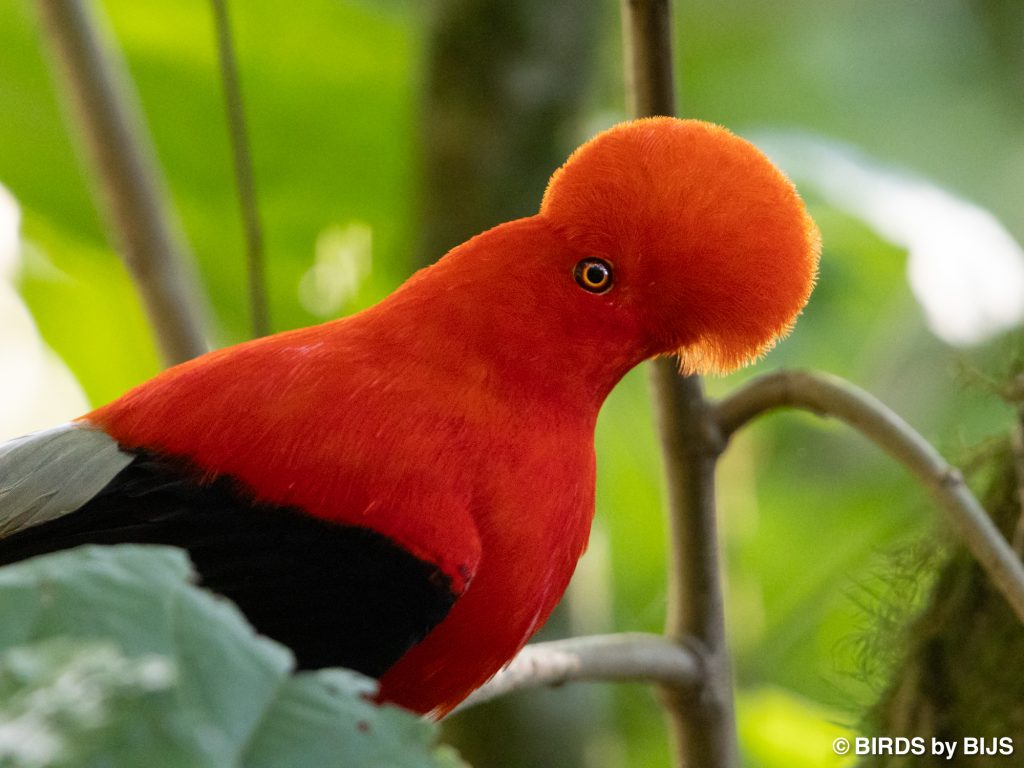
Some birds impress you with their colors.
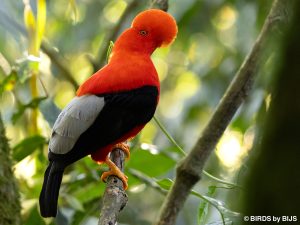
The Andean Cock-of-the-rock (Rupicola peruvianus) leaves you wondering what on Earth you just witnessed.
Brilliant orange males gather before sunrise deep within the Andean cloud forests, where they spend hours grunting, squealing, bowing, hopping, and flaring their crests in one of the most extraordinary courtship displays in the natural world.
For many birders, witnessing an active Cock-of-the-rock lek isn’t simply another species on a checklist.
It’s one of the defining wildlife spectacles of South America.
"Watching a Cock-of-the-rock lek isn't simply birding—it's watching evolution unfold in real time."
What makes the Andean Cock-of-the-rock so unique?
- One of South America’s most iconic birds
- Males gather in communal display arenas called leks
- Among the most extreme examples of sexual selection in birds
- Males provide no parental care whatsoever
- Surprisingly shy outside of the breeding season
- A signature species of Colombia and Ecuador’s Andean cloud forests
A bird that spends most of the year hiding
For much of the year, the Andean Cock-of-the-rock is surprisingly inconspicuous.
Despite their almost impossibly bright plumage, males quietly move through the cloud forest canopy feeding primarily on fruit, occasionally supplementing their diet with insects and small vertebrates. Encounter one outside the breeding season and it often melts back into the forest almost as quickly as it appeared.
Then the breeding season arrives.
Everything changes.

Nature's most eccentric dating competition
Most birds defend territories.
The Andean Cock-of-the-rock does something completely different.
Instead of spreading out, dozens of males gather together at traditional display sites known as leks—small patches of forest that may be used continuously for decades.
Here, every male competes for the attention of visiting females.
The forest transforms into a stage.
Males leap between branches, bow dramatically, raise their oversized crests, snap their wings, and produce an astonishing collection of guttural grunts, squeals, rattles, and clicks. Every movement is designed to outshine the competition.
To a first-time observer, it hardly seems real.
"The brightest males aren't defending territory. They're competing in one of evolution's most extravagant courtship performances."
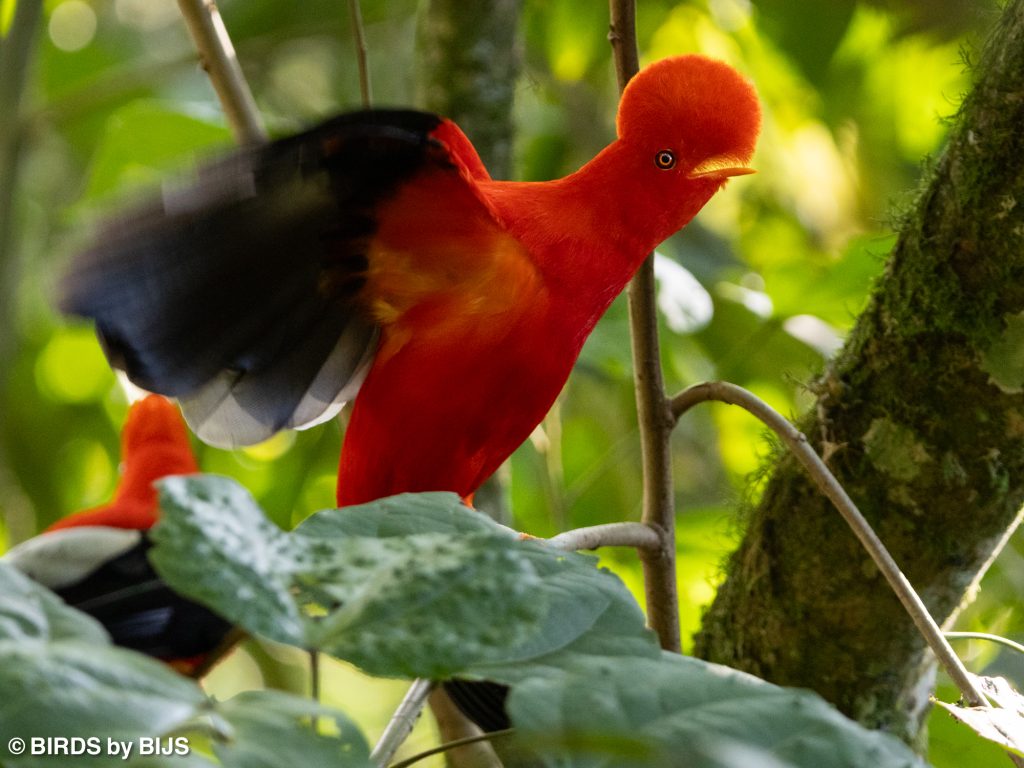
Here's the remarkable part
A lek isn’t just fascinating because of how spectacular it looks.
It’s fascinating because of how unfair it is.
Research on lekking birds has shown that a small number of dominant males often account for most successful matings, while many others may display for years without reproducing at all.
So why keep showing up?
Because even a very small chance of passing on your genes is better than none.
Over millions of years, this relentless competition has driven the evolution of brighter plumage, louder vocalizations, larger crests, and increasingly elaborate displays.
It’s one of the clearest examples of sexual selection anywhere in nature.
"Most males may never breed. Yet every season they return to compete again."
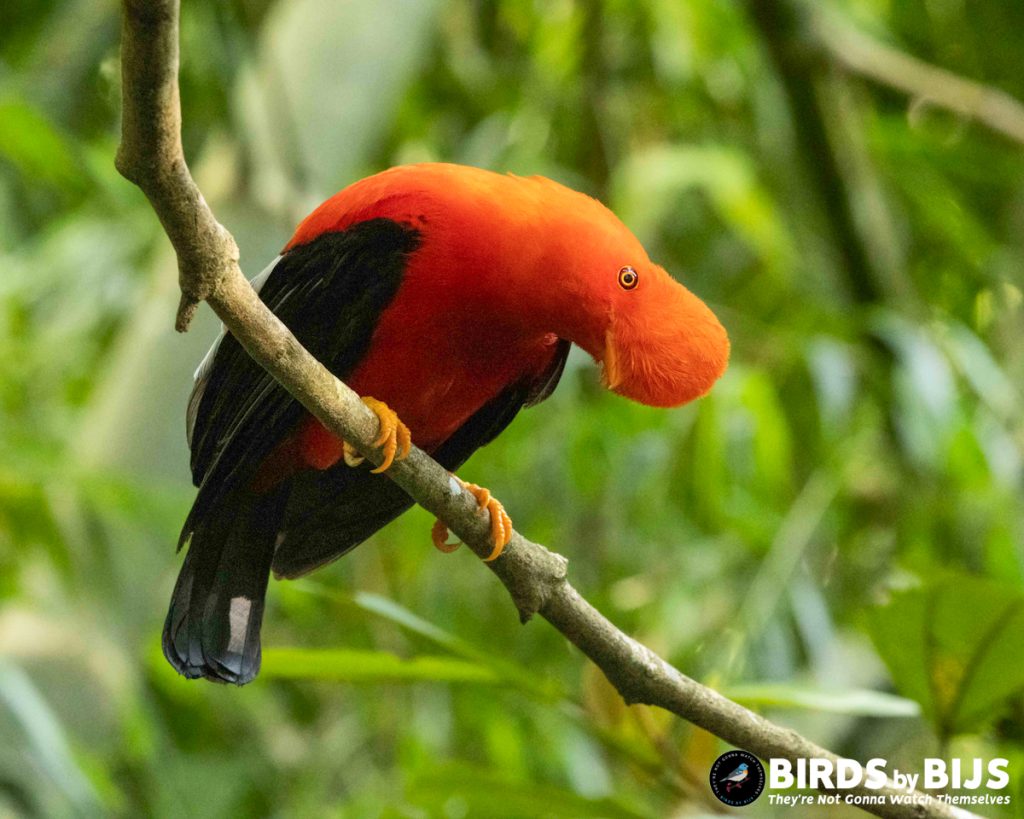
The females hold all the power
While the males command the spotlight, the females quietly decide everything.
A female may spend considerable time observing the displays before selecting a single mate.
Once mating is over, the male’s role ends.
He contributes no nest, no food, and no parental care.
Instead, the female builds a remarkable mud nest attached to sheltered rock faces or cliffs—the origin of the scientific name Rupicola, meaning rock dweller. She alone incubates the eggs and raises the chicks.
In the world of the Cock-of-the-rock, success depends entirely on convincing a female that you’re worth choosing.

Seeing a Cock-of-the-rock lek in Colombia
On our Colombia: Western & Central Andes Birding Tour, we visit an active lek in Antioquia where we’ve enjoyed unforgettable mornings watching ~12 displaying males at once.
As dawn breaks over the cloud forest, strange calls echo through the trees before flashes of orange begin appearing among the branches.
For the next several hours, the forest becomes a living theater as males perform for visiting females while photographers and birders witness one of the Andes’ greatest wildlife spectacles.
We also search for the species on our Ecuador: Northwest Andes & Eastern Foothills Birding Tour, where another population inhabits lush Andean cloud forests.
For many guests, this becomes the defining memory of the entire trip.

"Some birds are beautiful. A Cock-of-the-rock lek is unforgettable."
Continue Exploring
See This Bird on Tour
- Colombia: Western & Central Andes Birding Tour
- Ecuador: Northwest Andes & Eastern Foothills Birding Tour
Explore Related Articles
- Multicolored Tanager: A Must-See Colombia Endemic on Our Colombia Birding Tour
- Yellow-eared Parrot: Colombia’s Remarkable Conservation Success Story
Read Trip Reports