Yellow-eared Parrot: Colombia's Remarkable Conservation Success Story
The Yellow-eared Parrot (Ognorhynchus icterotis) was once on the very brink of extinction. By the late 1990s, scientists believed only 81 individuals remained in the wild, making it one of the rarest parrots on Earth.
Once found in both Colombia and Ecuador, the species has since been extirpated from Ecuador, leaving Colombia as its final stronghold. Against seemingly impossible odds, an extraordinary conservation movement has pulled this spectacular parrot back from the edge, transforming it into one of South America’s most inspiring wildlife recovery stories.
But the Yellow-eared Parrot was never the only thing at stake.
Its survival is inseparable from the fate of the towering Andean Wax Palm forests it depends on—an entire high-elevation ecosystem that shelters countless other plants and animals. Saving this parrot has meant protecting one of the Andes’ most iconic landscapes, proving that when we save a flagship species, we can save an entire ecosystem.
"Save the wax palm, and you save the parrot. Lose the palm, and an entire evolutionary relationship disappears with it."
What makes the Yellow-eared Parrot so special?
- Now endemic to Colombia
- Once reduced to just 81 known birds
- One of Colombia’s greatest conservation success stories
- Closely associated with the iconic Quindío Wax Palm
- A flagship species for Andean cloud forest conservation
- The only member of the genus Ognorhynchus
- A highlight of our Colombia: Western & Central Andes Birding Tour
A parrot that evolved around a tree
Most birds simply use trees.
The Yellow-eared Parrot depends on one.
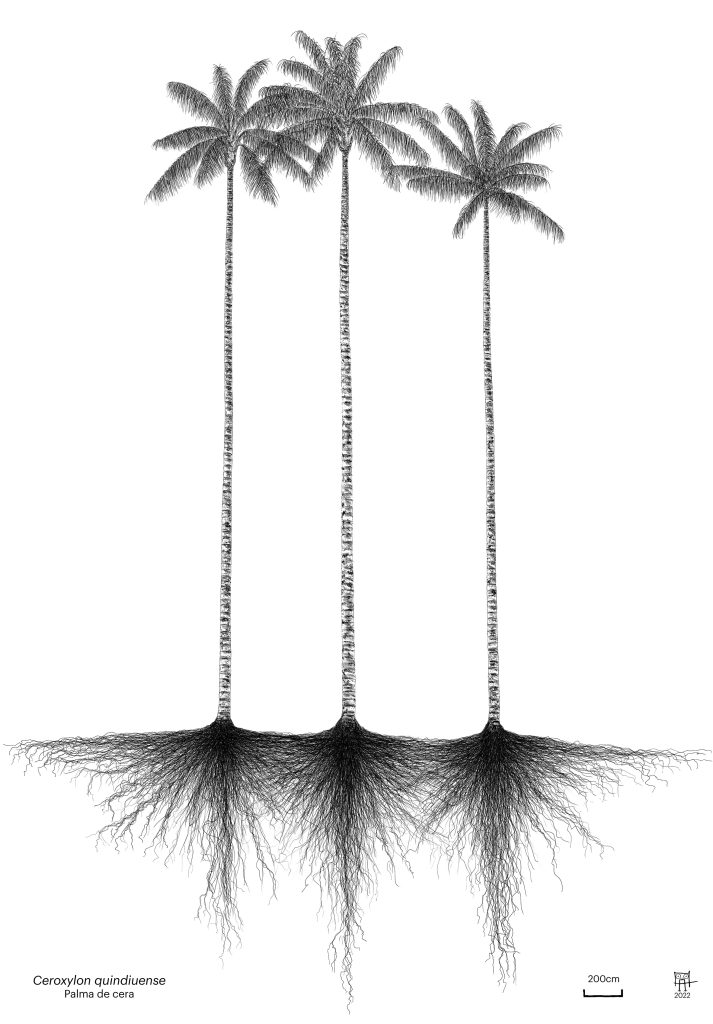
Throughout the Colombian Andes, these parrots have evolved alongside the magnificent Quindío Wax Palm (Ceroxylon quindiuense), Colombia’s national tree and the tallest palm species on Earth.
These towering palms provide far more than a place to perch.
They offer food through their fruit.
They provide cavities for nesting.
They serve as communal roosts.
For a Yellow-eared Parrot, an old wax palm is food, shelter, nursery, and home—all in one tree.
That relationship evolved over thousands of years.
Destroying it took only a few decades.
When a forest looks healthy—but isn't
One of the most fascinating lessons in conservation comes from the wax palm itself.
Drive through parts of Colombia’s Andes and you’ll still see magnificent wax palms towering above green pastures.
At first glance, everything appears healthy.
Look closer.
Almost every tree is old.
The surrounding cloud forest has disappeared.
Young palms are missing because cattle eat or trample seedlings before they can mature.
The forest still has grandparents.
It has almost no children.
Without new generations replacing the old giants, the entire ecosystem slowly disappears—even while it still looks beautiful.
The Yellow-eared Parrot became one of the first species to reveal this hidden problem.
"A forest can appear alive long after it has stopped replacing itself."
How Ecuador lost one of its parrots
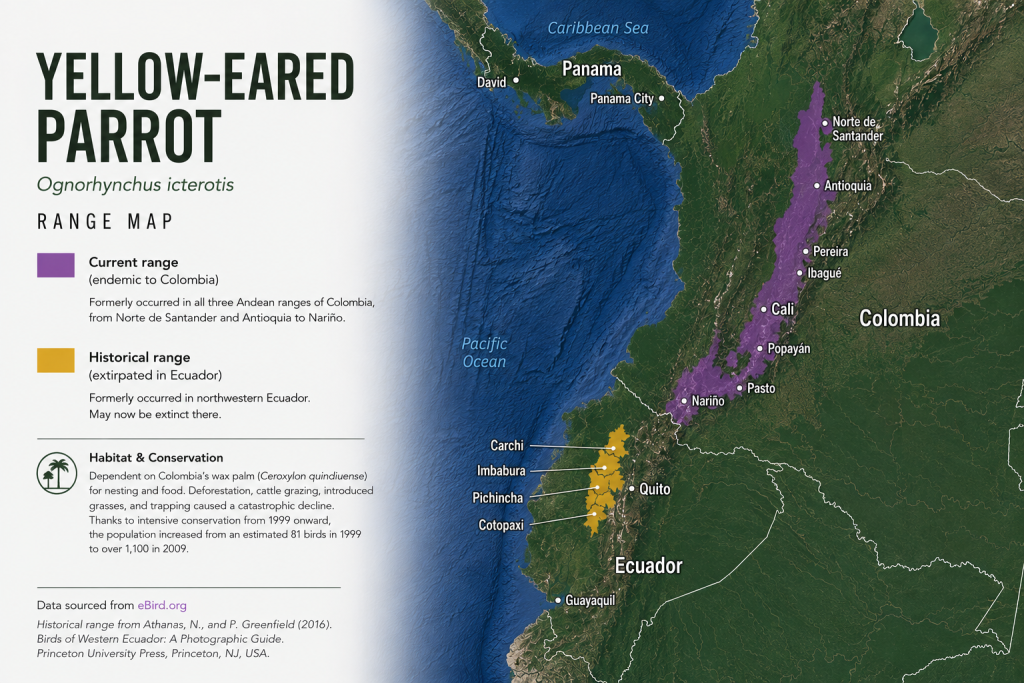
The Yellow-eared Parrot wasn’t always restricted to Colombia.
Historically, it inhabited both the Colombian and Ecuadorian Andes.
But as wax-palm forests disappeared and hunting pressures increased, populations collapsed throughout its range.
Despite extensive searches, no confirmed breeding population survives in Ecuador today.
The species is now considered extirpated there.
In a tragic twist, human activity effectively transformed the Yellow-eared Parrot into what is now, for all practical purposes, a Colombian endemic.
That makes protecting Colombia’s remaining populations even more important.
"The Yellow-eared Parrot didn't evolve as a Colombian endemic. It became one through loss."
Eighty-one birds changed everything
By the late 1990s, many ornithologists feared the species had disappeared forever.
Then came one of conservation’s greatest surprises.
Researchers rediscovered a surviving population in Colombia.
There were only 81 birds.
That number transformed the Yellow-eared Parrot from an interesting species into a national conservation emergency.
Scientists, local communities, conservation organizations, landowners, government agencies, and churches joined forces to protect remaining habitat, monitor nests, restore forests, install nest boxes, and fence young wax palms from grazing cattle.
What began as an effort to save one parrot soon became one of the largest community-driven conservation campaigns in the Andes.
Today, the Yellow-eared Parrot stands as one of Latin America’s greatest conservation success stories.

Conservation changed more than the landscape
One unexpected threat came from tradition.
For generations, wax-palm leaves had been harvested for Palm Sunday celebrations.
The practice carried deep cultural significance, but repeated harvesting damaged one of the parrot’s most important resources.
Rather than opposing the tradition outright, conservationists worked alongside churches, schools, and local communities to encourage sustainable alternatives.
Eventually, Colombia’s Catholic Church supported replacing wax-palm fronds with other species.
Few conservation victories are measured by changing centuries-old traditions.
This one was.

"Saving the Yellow-eared Parrot required more than protecting habitat. It required changing how an entire country viewed its national tree."
A flagship that protects an entire ecosystem
Some species become symbols.
The Yellow-eared Parrot became a movement.
Protecting its habitat means protecting Colombia’s cloud forests, watersheds, orchids, bromeliads, mammals, amphibians, insects, and countless other bird species.
Every restored wax palm supports future generations of parrots.
Every protected valley safeguards thousands of other organisms sharing the same mountains.
This is why conservationists call it a flagship species.
People may first fall in love with the parrot.
But ultimately, they’re helping save an entire ecosystem.
"Protect the Yellow-eared Parrot, and you protect one of the richest mountain ecosystems on Earth."
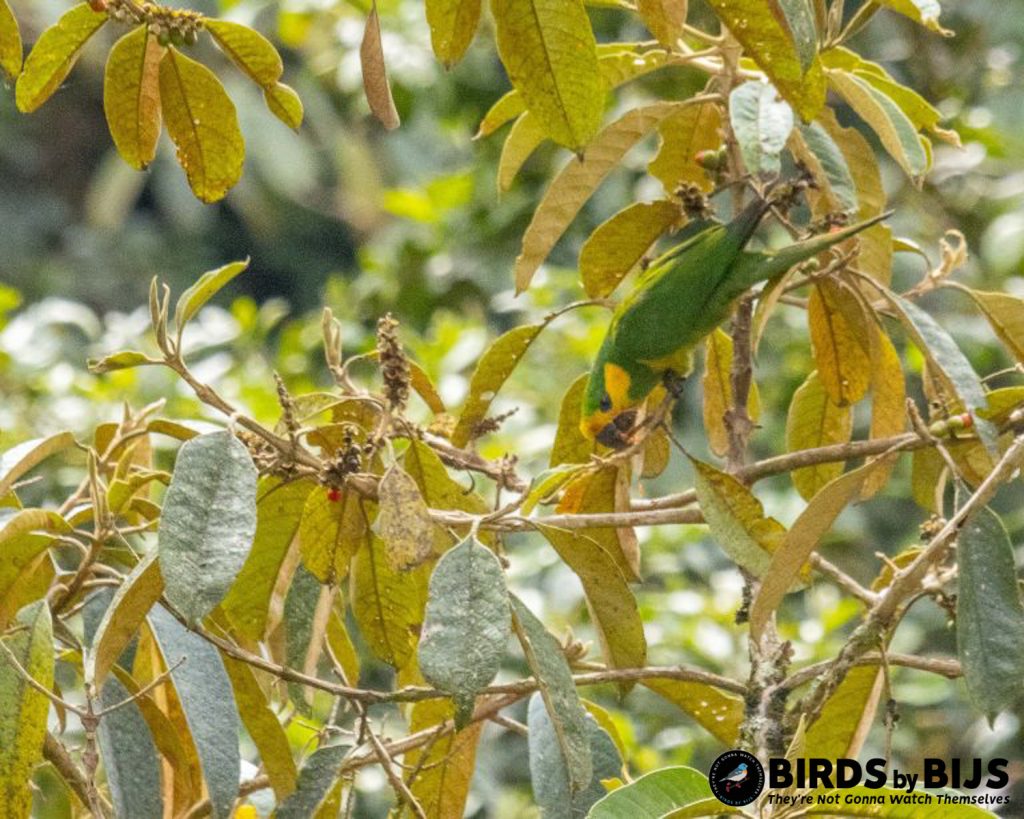
Seeing the Yellow-eared Parrot in Colombia
On our Colombia: Western & Central Andes Birding Tour
we search for Yellow-eared Parrots among the spectacular wax-palm valleys of the Central Andes.
The experience begins long before you see the birds.
Towering palms emerge through the morning mist.
Then distant calls echo across the valley.
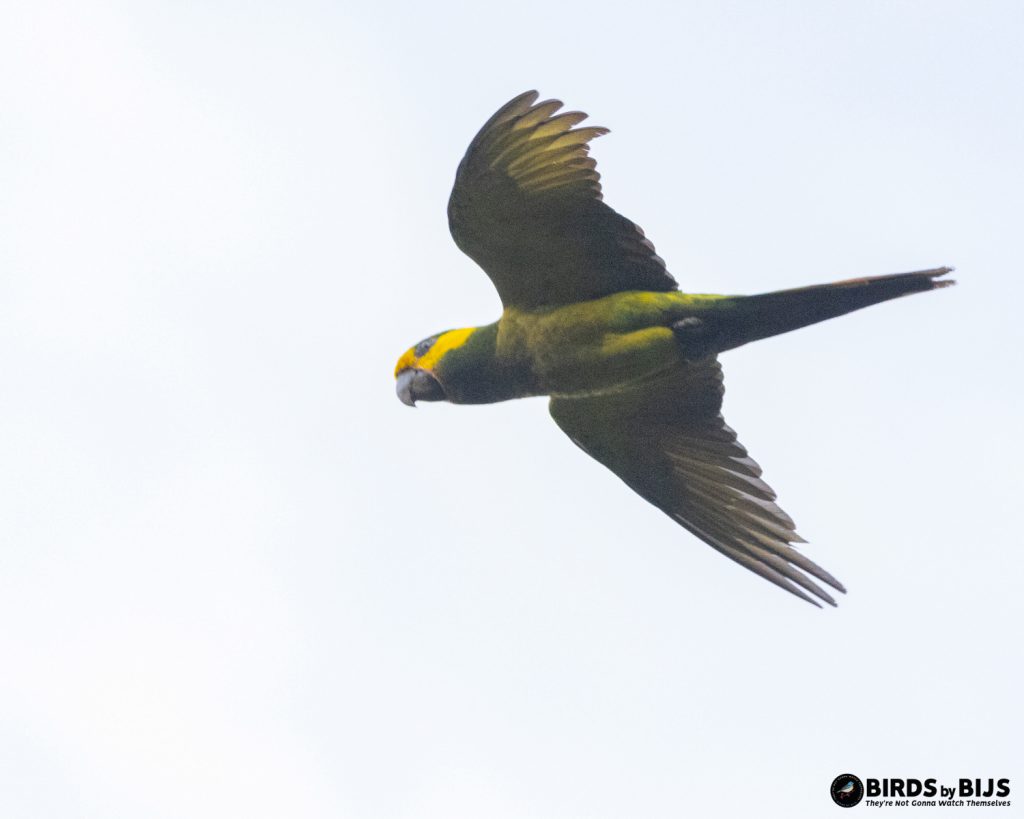
Suddenly, a flock of long-tailed green parrots sweeps overhead before disappearing into the crowns of palms more than 150 feet tall.
Knowing their history changes everything.
You’re not simply watching a rare parrot.
You’re witnessing one of conservation’s greatest success stories in flight.
Continue Exploring
See This Bird on Tour
Explore Related Articles
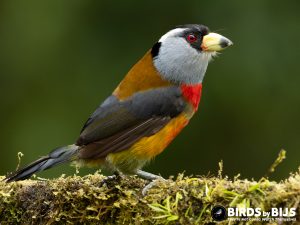
- Toucan Barbet: The Colorful Chocó Bird Caught Between Barbets and Toucans
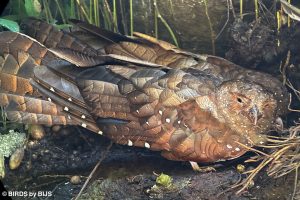
- Oilbird: The World’s Only Nocturnal Fruit-Eating Bird That
Read Trip Reports