
Oilbird: The World's Only Nocturnal Fruit-Eating Bird That Navigates by Echolocation
Some birds are unusual.
The Oilbird (Steatornis caripensis) seems almost impossible.
It’s the world’s only nocturnal fruit-eating bird.
It spends its days inside dark caves.
It navigates through complete darkness using echolocation, a skill made famous by bats.
And every night, it flies into the rainforest carrying seeds that help regenerate entire forests.
If evolution held a contest for the strangest bird in South America…
The Oilbird would be difficult to beat.
"The Oilbird isn't simply one of the world's strangest birds. It's one of the few that navigates like a bat and plants forests like a monkey."
What makes the Oilbird so extraordinary?
- The world’s only nocturnal fruit-eating bird
- One of only a handful of birds known to use true echolocation
- Roosts and nests deep inside caves
- An important long-distance seed disperser
- Capable of nightly movements exceeding 100 kilometers (60+ miles)
- One of the highlights of our Colombia: Western & Central Andes Birding Tour
A bird that learned to fly in the dark
Dark caves present an obvious problem.
Vision stops working.
Most birds avoid them entirely.
Oilbirds did something remarkable instead.
They evolved echolocation.
As they fly through narrow cave passages, Oilbirds produce rapid bursts of audible clicks. Those clicks bounce off cave walls, stalactites, and neighboring birds before returning as echoes, allowing them to navigate safely through complete darkness.
Unlike bats, whose ultrasonic calls are too high for humans to hear, Oilbird clicks are audible to us. Step inside an active colony and you’ll hear a chorus of sharp, mechanical clicks echoing through the cave.
It’s one of the few places on Earth where you can literally hear a bird “seeing.”
"Most birds rely on their eyes. The Oilbird learned to navigate by sound."
The only bird of its kind
Most fruit-eating birds are active during the day.
Oilbirds wait until sunset.
As darkness falls, they leave their caves and begin searching for fruiting trees across the surrounding rainforest.
Their favorite foods are lipid-rich fruits from trees in the laurel, palm, and nutmeg families.
These energy-rich fruits fuel astonishing nightly journeys.
Scientists tracking Oilbirds have discovered individuals regularly traveling tens of kilometers in a single night, with some documented movements exceeding 100 kilometers (60 miles) before returning to the very same cave before sunrise.
Every evening, they become long-distance commuters.
Nature's nighttime gardeners
Every fruit an Oilbird swallows carries potential.
Seeds pass through the digestive tract largely unharmed before being deposited far from the parent tree.
Because Oilbirds travel such extraordinary distances, they connect forests that might otherwise remain isolated.
In ecological terms, they’re among the Neotropics’ most important long-distance seed dispersers.
Some trees owe much of their distribution to birds like these.
While toucans, guans, and cotingas spread seeds during the day…
Oilbirds work the night shift.
"Every night, Oilbirds quietly help rebuild the rainforest—one seed at a time."
A cave unlike any other
Most birders only glimpse Oilbirds briefly as they emerge at dusk.
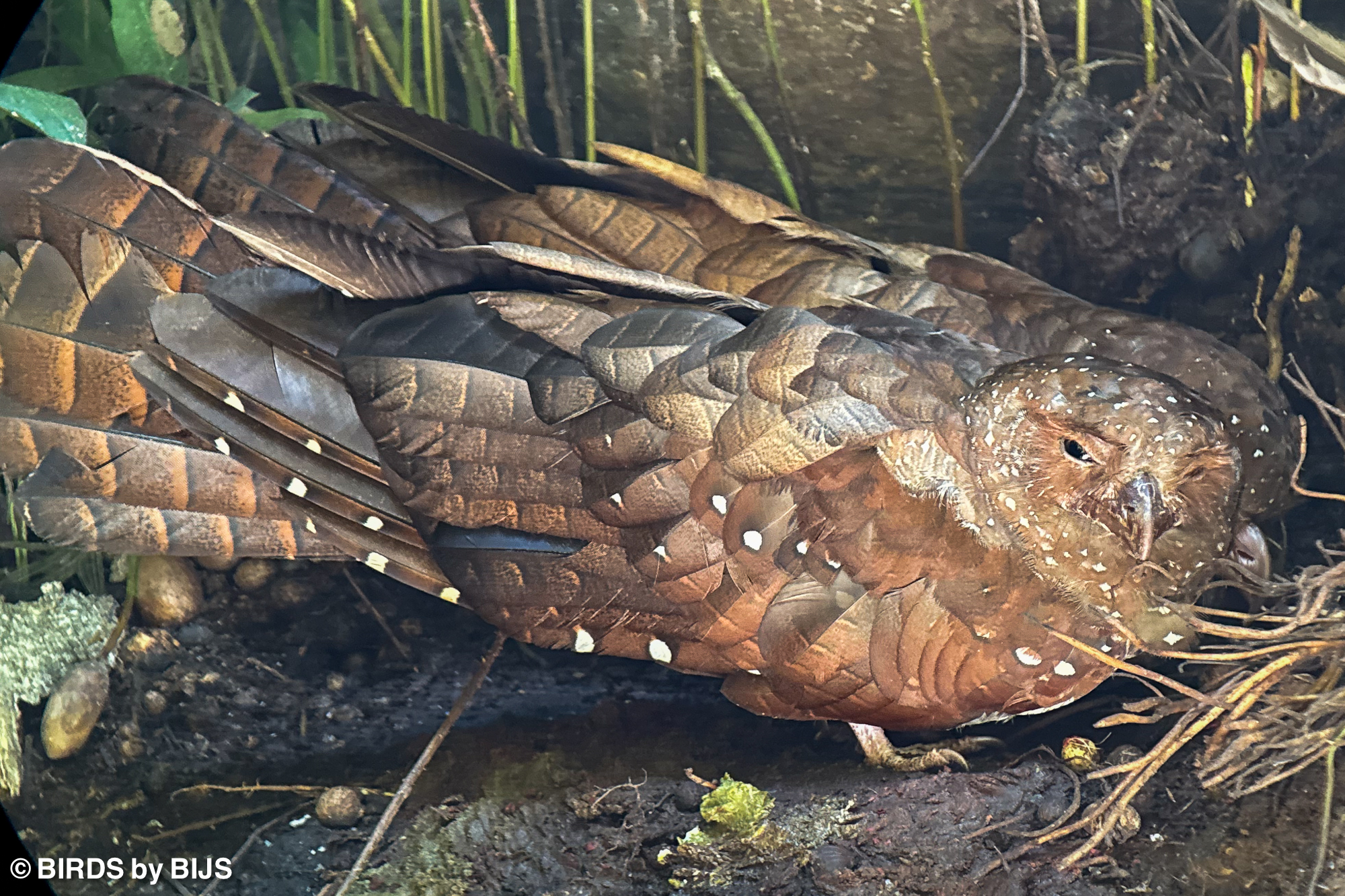
On our Colombia: Western & Central Andes Birding Tour, we visit one of the region’s most remarkable daylight roosts, allowing guests to observe and photograph these extraordinary birds while they rest inside the cave.
Seeing an Oilbird at close range completely changes your perception of it.
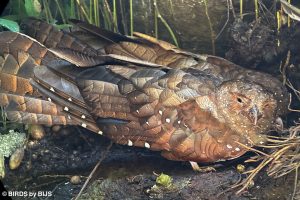
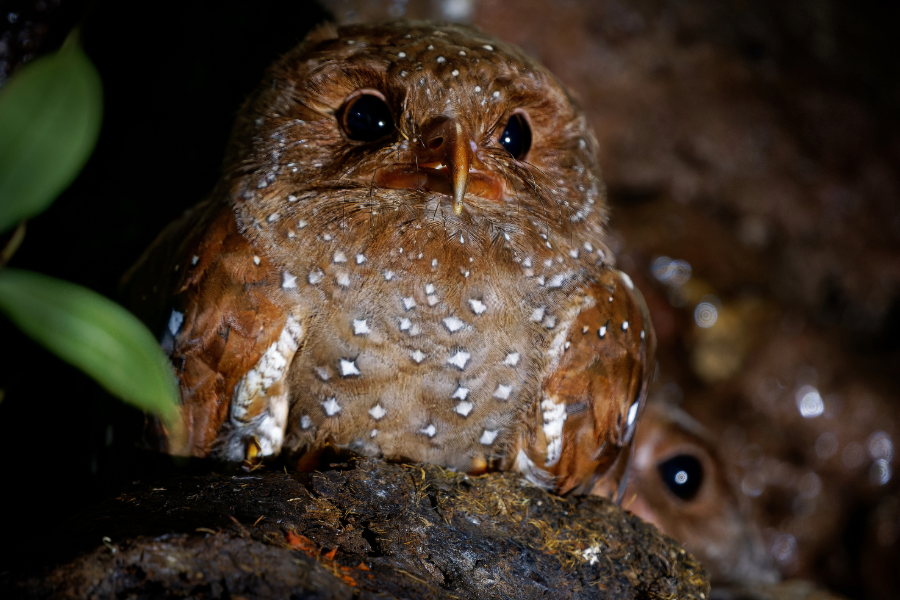
Its enormous dark eyes reveal its nocturnal lifestyle.
Its chestnut plumage, sprinkled with white spots, blends surprisingly well against the cave walls.
And despite spending much of their lives in darkness, these birds remain remarkably calm as they roost together in the cool interior of the cave.
It’s one of the finest Oilbird viewing opportunities in Colombia.
"Some birds are best seen through binoculars. Oilbirds are best experienced inside their world."
Why caves matter
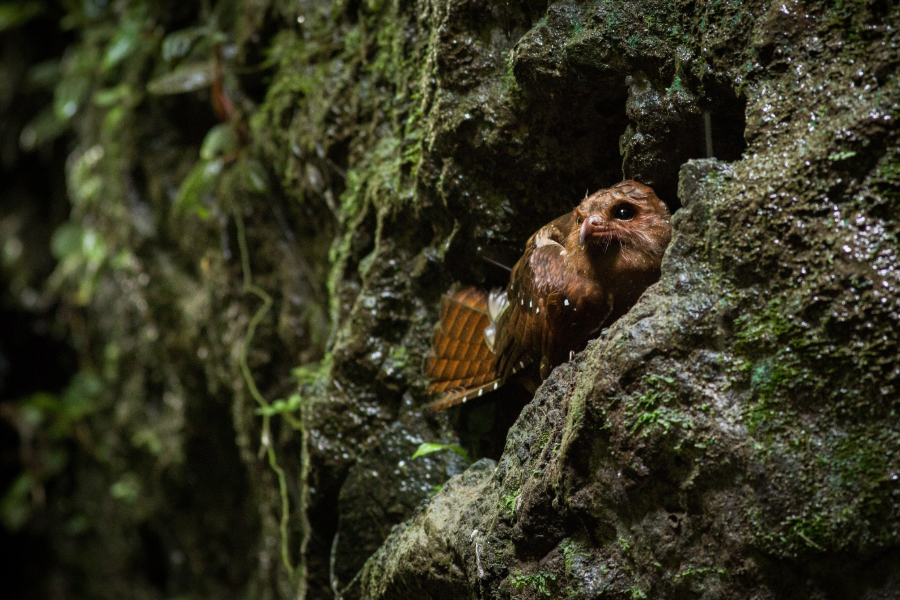
Oilbirds are remarkably faithful to their cave systems.
The same caves may be used for generations, serving as nesting colonies, communal roosts, and safe refuges from daytime predators.
That makes protecting cave systems just as important as protecting the surrounding rainforest.
Without intact forest, Oilbirds lose their food.
Without secure caves, they lose their homes.
Conserving one means conserving the other.
One of evolution's greatest oddities
If someone described an animal that…
- lives in caves,
- flies only at night,
- eats fruit,
- navigates using echolocation,
- and disperses rainforest seeds over vast distances…
…most people would probably imagine a bat.
Instead, evolution produced a bird.
The Oilbird reminds us that nature often arrives at similar solutions in completely different ways—a remarkable example of how evolution can shape unrelated animals facing the same challenges.
That’s one reason it’s fascinated scientists for generations.
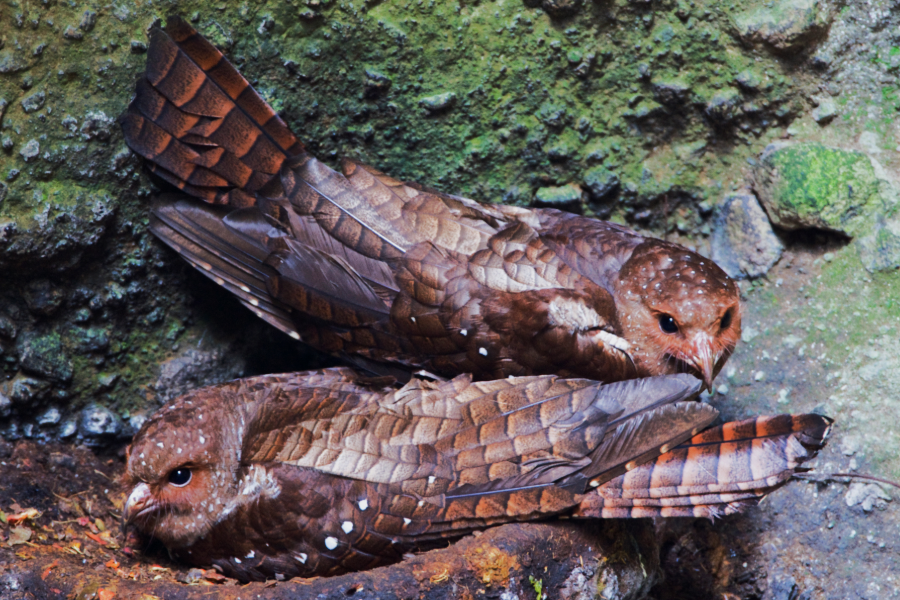
"The Oilbird proves that evolution doesn't always invent something new. Sometimes it simply finds another way to solve the same problem."
Experience one of the world's strangest birds
Our Colombia: Western & Central Andes Birding Tour
includes a visit to one of Colombia’s finest daylight Oilbird roosts, offering exceptional opportunities to observe and photograph one of evolution’s most extraordinary creations.
Seeing an Oilbird is memorable.
Understanding what you’re looking at makes it unforgettable.
Continue Exploring
See This Bird on Tour
Explore Related Articles
- Toucan Barbet: The Colorful Chocó Bird Caught Between Barbets and Toucans
- Gold-ringed Tanager: Colombia’s Most Coveted Endemic Bird
- Yellow-eared Parrot: Colombia’s Remarkable Conservation Success Story
Read Trip Reports